We use cookies on this website. Cookies help us deliver the best experience on our website. More about cookies

-
- Education
- Education
- Find programmes and courses
- Applications and admissions
- Tuition fees
- Scholarships
- Exchange studies at Malmö University
- Study Guidance
-
- After admission
- After admission
- Moving to Malmö
- Pre-orientation
-
- About studies at Malmö University
- About studies at Malmö University
- Why choose Malmö University
- Understanding university studies
- Connect with our students
On the page -
- Research
- Research
- Find researchers and research
-
- Doctoral studies
- Doctoral studies
- Doctoral courses
-
- Doctoral schools
- Doctoral schools
- Adaptation of urban space through sustainable regeneration
- Culturally Empowering Education through Language and Literature
- Doctoral school: DACHE
- Education, Learning and Globalisation
- Finding ways in a time of great future challenges (FinnFram)
- Swedish National Graduate School in Science and Technology Education Research
- Learning in Multicultural Societal Contexts
- Pedagogy and Vocational Skills
- Relevancing Mathematics and Science Education (RelMaS)
- Sustainable Movement Education
- The National Research School for Professionals in Social Services
- Research subjects
-
- Research centres
- Research centres
- Biofilms Research Centre for Biointerfaces
-
- Citizen Health
- Citizen Health
- Kids in Action
- Imagining and Co-Creating Futures
- Institute for Urban Research
- Malmö Institute for Migration Studies
- Literacy and Inclusive Teaching
- Centre for Work Life Studies
- Sustainable Digitalisation Research Centre
- Centre for Sexology and Sexuality Studies
-
- Research publications
- Research publications
- Search for research publications in Diva
- Malmö University Press
-
- Research in focus
- Research in focus
- Focus: In the classroom
- Focus: The Election 2026
- Focus: A future with AI
- Focus: Climate and society
- Focus: Peace, democracy and human rights
- Focus: The mouth
- Focus: Migration
- Focus: Elite Sport, Football and Supporter Culture
- Focus: Perspectives on Malmö
- Focus: Loneliness
- Research events
- Participate in a research study
On the page -
- Collaboration & Innovation
- Collaboration & Innovation
-
- Levels of collaboration
- Levels of collaboration
-
- Local collaboration
- Local collaboration
- Muvah
- Co-Create Malmö
- Regional collaboration
- National collaboration
-
- International collaboration
- International collaboration
- UNIC
- Innovation
- Collaboration with students
- Collaborate with researchers
- Culture collaboration
- Support Malmö University
On the page -
- About us
- About us
-
- Meet Malmö University
- Meet Malmö University
- The history of the University
- Malmö University in numbers
- Sustainability
-
- Management and organisation
- Management and organisation
-
- Faculty of Culture and Society
- Faculty of Culture and Society
- Department of Global Political Studies
- School of Arts and Communication
- Department of Urban Studies
-
- Faculty of Education and Society
- Faculty of Education and Society
- Department of Childhood, Education and Society
- Department of Sport Sciences
- Department of Culture, Languages and Media
- Department of Natural Science, Mathematics and Society
- Department of Society, Culture and Identity
- Department of School Development and Leadership
- The Centre for Teaching and Learning (CAKL)
- Knowledge Centre for Educational Health in Schools (PHIS)
-
- Faculty of Technology and Society
- Faculty of Technology and Society
- Department of Computer Science and Media Technology
- Department of Materials Science and Applied Mathematics
- Faculty of Odontology
- Management and decision-making paths
- Malmö University's strategy 2030
-
- Quality assurance work at the University
- Quality assurance work at the University
- Widened recruitment and participation
- University Dental Clinic
-
- Malmö Academic Choir and Orchestra
- Malmö Academic Choir and Orchestra
- Student work – video pieces
On the page -
- Contact
- Contact
- We help you with your questions
- Find your way around Malmö University
-
- News and press
- News and press
-
- Graphic manual
- Graphic manual
- Logo
- Colours
- Typography
- Visual language
- Film and live broadcasts
- Visit Malmö University
- Merchandise
- Supplier information and invoice management
- Whistleblowing
On the page
FACULTY OF CULTURE AND SOCIETY | Lecture
FUTURES Thoughts with Regine Paul – The AI Matrix
Tuesday 8 September, 10:15 - 12:00
Niagara, K3 Studio (by the 'C' lifts), 5th floor
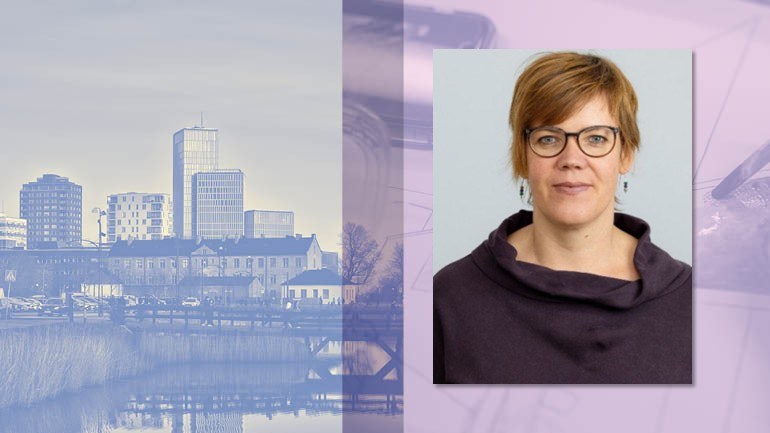
Profits, politics and the struggle over our tech future
AI is often presented in extremes, either as a revolutionary technology boosting prosperity for everyone, or as a juggernaut that threatens jobs, democracy, or even human life. This talk cuts through those narratives by asking a simpler question: who really benefits from AI, and who has the power to shape how it is made and used? Drawing on a critical political economy perspective, we argue that today’s AI boom is not simply about clever machines taking over, but about profit imperatives and political choices. AI technologies are developed and deployed within pre-existing economic structures, largely reinforcing inequalities between industries, workers, and countries rather than transforming them away.
Acknowledgement of this distinct socio-economic embedding of a hyped technology informs our search for forms of resistance. Contrary to the techno-determinist idea that the spread of AI is inevitable, and based on our recent co-authored book “The AI Matrix”, we present growing efforts to push back against the harmful and extractive uses of such technologies. These include workers challenging algorithmic surveillance and automation efforts, activists exposing the socio-ecological costs hidden in AI value chains, whistleblowers publicising biased systems and opaque business decisions, but also technicians experimenting with alternative, more public-interest-driven and less extractive forms of AI. Together, these emerging critical engagements with mainstream big tech show that AI futures remain contested and ultimately open. Whether current tech developments deepen global inequalities or support fairer and more democratic societies therefore depends less on the technology itself than on the collective decisions we make about the role of AI in our economies and societies.
You can read about Regine Paul's work here:
Share Event