Citizen Health
Challenging health inequalities through the power of collaboration and pioneering research.
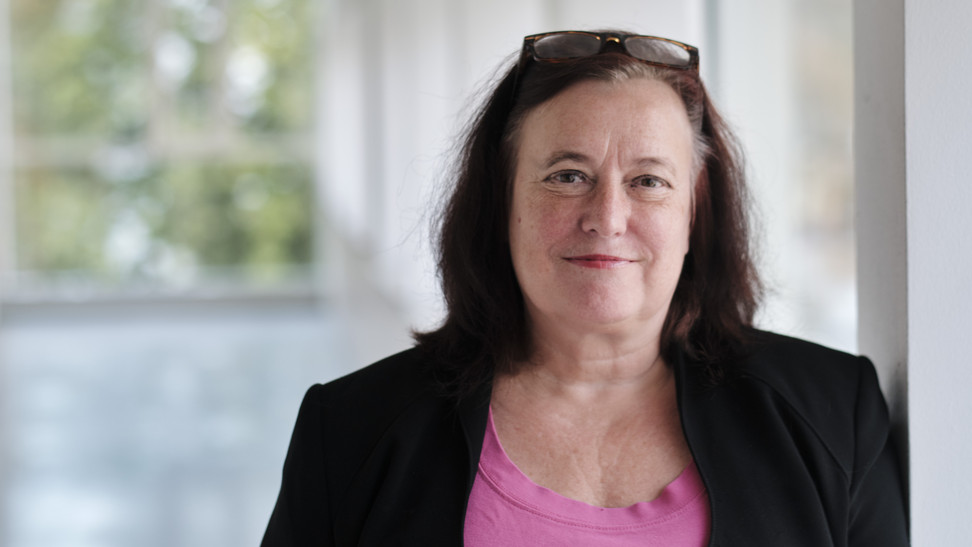
Margareta Rämgård, Director of Citizen Health
“We want to include citizens in the research”
Citizen Health research centre aims to promote good health by creating socially sustainable communities. The focus is on citizens who are involved in the whole scope of the research process to create new knowledge. “It's a form of democratisation of research where social science meets health...
“We want to include citizens in the research”
Citizen Health research centre aims to promote good health by creating socially sustainable communities. The focus is on citizens who are involved in the whole scope of the research process to create new knowledge. “It's a form of democratisation of research where social science meets health science,” says director Margareta Rämgård.
Citizen Health is an interdisciplinary research centre with staff from all five faculties of the University. Its focus is on improving health promotion in public health and establish health equity in a broad sense. To achieve this, the centre works with community-engaged research and participatory methods in education.
Citizens should be more involved in the research; many groups in society are marginalised and are often left out, and it is always someone else who determines what their needs are.
Margareta Rämgård
The research methodology is participatory research and is known as Community-Based Participatory Research (CBPR). Simply put, this means that different stakeholders, such as the public sector, community organisations, decision-makers, and researchers, create new knowledge together.
A crucial factor for Citizen Health is that citizens are seen as active individuals who, with the right support, can take responsibility for their health.
“Citizens should be more involved in the research; many groups in society are marginalised and are often left out, and it is always someone else who determines what their needs are,” says Rämgård, associate professor at the Department of Care Sciences, who together with Susanna Hedenborg, professor of sports science, and Michael Strange, associate professor of international relations, make up the steering group for the centre.
An important ambition for the research centre is to integrate young researchers and create an international environment for them. Some already associated with the centre include:
- Doctoral student Louise Burenby Yxne, whose participatory research project investigates children's wellbeing together with the children
- Doctoral student Lisa Axelsson, who is investigating the barriers migrants face in terms of health, particularly linked to the need for movement and physical activity, with migrant women
- Doctoral student Dennis Munetsi, who is researching the global and everyday political economy of menstrual health apps with communities, focusing on both their economic flows and how the technology is received in Zimbabwe.
The doctoral students are also part of global research networks.
As a newly established research centre, Citizen Health is in the early stages of its work, but Rämgård already sees a dream breakthrough ahead: To create an international research centre in Malmö that actively promotes democratic, sustainable societies and to which citizens and civil society can also turn for research support.


-
2026 | Article in journal
PARENTS’ VIEWS ON THEIR OWN AND THEIR CHILDREN’S WELL-BEING IN THE CONTEXT OF ORGANISED AFTER-SCHOOL ACTIVITIES IN DISADVANTAGED AREAS
Elisabeth Mangrio, Nour Zarzour, Margareta Rämgård
-
2026 | Conference paper
Invited keynote: The humans in the machine' - participatory considerations in next-gen AI pharmaceuticals.
Michael Strange
-
2026 | Report
Report of the World Health Organization Knowledge Community on responsible artificial intelligence in health: From promise to practice
Regional Office for Europe World Health Organization, Michael Strange
-
2026 | Report
Mindfulness som främjare av hälsa inom näringslivet
Lovisa Broms, Susanna Hedenborg, Camilo Saenz Moncaleano, Jenny Vikman
-
2026 | Article in journal
How the AI boom was enabled by a 1970s economic revolution
Michael Strange, Marisa Ponti
-
2026 | Other
The book that changed my mind – 12 experts share a perspective‑shifting read
Mark Lorch, Alina Patelli, Ana M Queirós, Anna Bedenk-Smith, Benjamin Curtis, Eva Wennås Brante, Jack Fennell, Jonathan Fisk, Laura Stephenson, Makayla Lewis, Michael Strange, Viren Swami
-
2026 | Report
Mindfulness som främjare av hälsa bland seniorer
Aurélien Daudi, Susanna Hedenborg, Lovisa Broms
-
2026 | Report
En kunskapsöversikt om mindfulness i arbetslivet
Jenny Vikman
-
2026 | Conference paper
The Politics of Defining AI: Discourse, Legitimacy, and the Ethics Crisis
Jess Haynie-Lavelle
-
2026 | Article, review/survey
Advances in (Bio)Sensors for Physiological Monitoring: A Special Issue Review
Magnus Falk, Sergey Shleev
-
 Research project
Existential loneliness from the perspective of older migrants
-
Research project
How Are You Really Doing? – Young People’s Well-Being in the Heart of Malmö (HEM-study)
-
Research project
What happens at school? Foreign born parents' contact with schools
-
Research project
HEALTHCOM- Healthy communities in ageing societies – participatory research with elderly immigrants and refugees living in a Nordic...
-
Research project
Future Society and Democracy in Europe
-
Research project
Children and youth integration through sport. Examples of Sweden and Uganda
-
Research project
Kids In Action for Health Equity
-
Research project
KIDS in action promoting health equity in socially deprived areas (K.A.H.E.Q Study)
-
Research project
Health in learning and teacher training (HILL)
-
Research project
Equity perspectives in school-based mental health promotion
-
Research project
Equal health - Health promotion in collaboration
New member
Part of UNESCO’s global network on AI ethics and policy
Citizen Health is now a member of UNESCO’s Global Civil Society Organisations and Academic Network on AI Ethics and Policy. The network brings together organisations worldwide to support collaboration, knowledge exchange, and broader participation in shaping global AI governance.
Through its involvement, Citizen Health contributes a Malmö University perspective on participatory approaches in healthcare, engaging with international academic and civil society partners to advance the ethical and inclusive development of AI.
Collaborative Action Research Network (CARN)
About CARN
CARN is an international community committed to advancing collaborative and action-oriented research across diverse fields and professional practices.
The network brings together researchers, educators, practitioners, and community partners who share a commitment to inquiry that leads to meaningful, real-world change.
With a strong focus on participation, reflection, and shared learning, CARN supports research grounded in practice and driven by collective action.
Citizen Health’s Connection to CARN
Citizen Health has been actively engaged in CARN for more than a decade. Together with Malmö University, Citizen Health is a sponsoring member of the network and contributes to strengthening collaborative and participatory research both locally and internationally.
In 2024, Citizen Health proudly hosted the Annual CARN Conference, further deepening its role in supporting CARN’s mission to foster dialogue, innovation, and action through research.
International Collaboration for Participatory Health Research (ICPHR)
About ICPHR
ICPHR is a global network dedicated to advancing high-quality participatory health research. It connects researchers, practitioners, community partners, and institutions committed to collaborative approaches that strengthen health, equity, and social justice.
Through shared standards, working groups, and international cooperation, ICPHR supports the development, evaluation, and dissemination of participatory research that is grounded in the lived experiences of communities.
Within ICPHR, several international working groups collaborate to advance participatory health research across diverse themes and communities:
- Children and young people: Kids in Action
- migrant health,
- ethics,
- standards of practice,
- community mental health,
- indigenous health,
- and health promotion.
Each working group brings together researchers, practitioners, and community partners to share knowledge, develop methods, and strengthen the quality and impact of participatory health research worldwide.
More about CzH PAR Journal Club
The CzH PAR Journal Club serves as an alternative to more traditional institutional doctoral seminars. The forum is designed to be open, flexible and entirely centred on the actual needs of researchers within PAR. Here, there is space to discuss what is often missing from formal doctoral programmes: relationships, ethics, power, trust, conflicts, uncertainty and the complexity that characterises truly participant-based work.
This is a place where researchers can breathe, reflect and talk to others who understand the specific challenges of PAR.
The CzH PAR Journal Club offers a vibrant and varied meeting place:
Local activities and collegial discussions where the participants themselves set the agenda.
Invited senior researchers with whom PhD students can engage in in-depth dialogues on issues that go far beyond traditional theory courses.
Practitioners from various sectors of society who share experiences of participatory processes, with a focus on trust, power, complexity and the turbulence that often arises in PAR work.
By combining academic and practical perspectives, a rich and supportive learning environment is created.
The objectives of the CzH PAR Journal Club
- To encourage collaboration between PhD students and recent PhD graduates working with PAR across different disciplines.
- To facilitate the sharing of resources, methods and best practices.
- To offer training, workshops and mentoring that strengthen key skills in PAR.
- To promote continuous knowledge exchange through regular meetings and seminars.
- To create a platform for networking with colleagues, senior researchers and potential collaborators.
- Increase the visibility and recognition of junior researchers’ work.
- Help shape a collective voice that can influence policy development and funding opportunities for PAR initiatives.
Is this the forum for you?
Do you work with PAR as a PhD student or early-career researcher? Do you sometimes feel isolated in your research environment? Do you lack colleagues who understand the specific challenges of participatory research? Do you need a forum where you can discuss, reflect and develop alongside others in similar situations?
Then this forum is for you.
Here you will meet people who share your questions, your challenges and your passion for participatory research.
Upcoming meeting dates
The CzH PAR Journal Club meets once a month, usually on Tuesdays, from 1.15 pm to 2.15 pm, with the option of both in-person and online attendance. Here are our upcoming meeting dates for 2026:
5 May 2026, 13.15–14.15
2 June 2026, 13.15–14.15
8 September 2026, 13.15–14.15
6 October 2026, 13.15–14.15
1 December 2026, 13.15–14.15
Would you like to join us?
Contact: Rathi Ramji, Senior Lecturer in Care Science
-

Caroline Wahlberg Björk – Doctoral student
caroline.wahlberg-bjork@mau.se
-

Erika Hellberg – Doctoral student
erika.hellberg@mau.se
-

Lisa Axelsson – Doctoral student
lisa.axelsson@mau.se
-

Louise Burenby Yxne – Doctoral student
louise.burenby-yxne@mau.se
-

My Törner – Doctoral student
my.torner@mau.se
-

Comfort Ankunda – Doctoral student
comfort.ankunda@mau.se
-

Dennis Munetsi – Doctoral student
dennis.munetsi@mau.se
-

Jess Haynie-Lavelle – Doctoral student
jess.haynie-lavelle@mau.se
-
Carolin Bugey
Umeå University
-
Layan Amouri
Lund University
-
Elin Salmiranta
University West
-
Rose Marie Imoni
Luleå University of Technology
-
Anne Marie Sutarie
Jönköping University
-
Emma Ellesen – Emma Ellesen
Denmark
-
Lucas Puah Jia Rong
Singapore
-
Aissatou Tiam
Canada
Insights
Kids in Action: a global network for participatory research

Kids in Action: a global network for participatory research
Citizen Health hosts and coordinates the Kids in Action Network under the banner KIA 2.0. Kids in Action is an international working group dedicated to strengthening participatory research with children. The network creates meaningful spaces where children’s voices, rights, and perspectives are taken seriously, and where they can act as active citizens and change-makers.
Pondering AI: A Healthier AI Narrative
Pondering AI: A Healthier AI Narrative
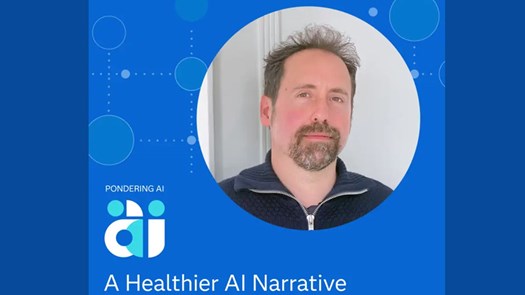
What happens when artificial intelligence meets global health? In this podcast episode, Michael Strange, Associate Professor of Global Political Studies at Malmö University, speaks with Kimberly Nevala about the role of AI in healthcare – beyond the hype. They explore how the pandemic reshaped the landscape, why technology must be understood in its political and material context, and why humility and interdisciplinarity are crucial for building a sustainable, inclusive, and human-centred healthcare system.
Podcast episode: ‘Equal Health in Lindängen’
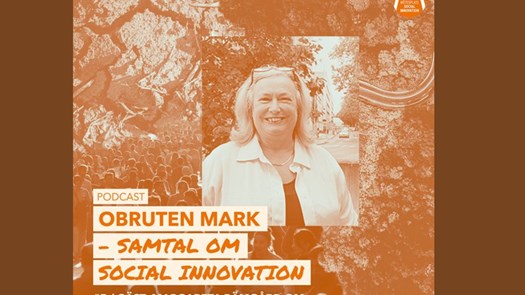
Podcast episode: ‘Equal Health in Lindängen’
A podcast in Swedish. Travel to Lindängen, Malmö – a neighbourhood shaped by both challenges and strong community drive. Margareta Rämgård, Associate Professor at Malmö University, shares how residents and local actors co‑created ‘Equal Health in Lindängen’, a project centred on people’s needs. Through health promoters and trust‑based relationships, the initiative fosters better health and greater empowerment.
Join us
Join us in shaping healthier communities
We welcome individuals passionate about health and well-being, whether you come from a healthcare background or care about improving life for yourself and those around you.
At our centre in Southern Sweden, we host workshops, collaborate on new ideas, and explore the key themes driving our work. We're always open to fresh perspectives and invite both local and international partners to join us in sharing knowledge, methods, and experiences.
Let’s work together to build healthier, more connected communities.
-
Mary Bradon Miller – Professor
University of Louisville, USA
-
Jane Springett – Professor Emeritus
University of Alberta, Canada
-
David Napier – Professor
University College of London, England
-
Pieter Bevelander – Professor
MIM Research Centre, Malmö University
-
Per Alstergren – Professor/Dean
Faculty of Odontology, Malmö University
-
Martin Höst – Professor, Dean
Faculty of Technology and Society, Malmö University
-
Malin Skogström – Head of Unit/General Practitioner
Region Skåne
-
Sara Svensson – Regional Manager
Southern Region, Rädda barnen
-
Malin Eggertz Forsmark – Head of Department
City of Malmö
-

Margareta Rämgård – Associate Professor/Senior lecturer
margareta.ramgard@mau.se
-

Michael Strange – Associate Professor/Senior lecturer
michael.strange@mau.se
-

Susanna Hedenborg – Pro dean/Professor
susanna.hedenborg@mau.se
-

Slobodan Zdravkovic – Associate Professor/Senior lecturer
slobodan.zdravkovic@mau.se