We use cookies on this website. Cookies help us deliver the best experience on our website. More about cookies

-
- Education
- Education
- Find programmes and courses
- Applications and admissions
- Tuition fees
- Scholarships
- Exchange studies at Malmö University
- Study Guidance
-
- After admission
- After admission
- Moving to Malmö
- Pre-orientation
- Arrival guide
-
- About studies at Malmö University
- About studies at Malmö University
- Why choose Malmö University
- Understanding university studies
- Connect with our students
On the page -
- Research
- Research
- Find researchers and research
-
- Doctoral studies
- Doctoral studies
- Doctoral courses
-
- Doctoral schools
- Doctoral schools
- Adaptation of urban space through sustainable regeneration
- Culturally Empowering Education through Language and Literature
- Doctoral school: DACHE
- Education, Learning and Globalisation
- Finding ways in a time of great future challenges (FinnFram)
- Swedish National Graduate School in Science and Technology Education Research
- Learning in Multicultural Societal Contexts
- Pedagogy and Vocational Skills
- Relevancing Mathematics and Science Education (RelMaS)
- Sustainable Movement Education
- The National Research School for Professionals in Social Services
- Research subjects
-
- Research centres
- Research centres
-
- Biofilms Research Centre for Biointerfaces
- Biofilms Research Centre for Biointerfaces
- Water Science Lab
-
- Citizen Health
- Citizen Health
- Kids in Action
- Imagining and Co-Creating Futures
- Institute for Urban Research
- Malmö Institute for Migration Studies
- Literacy and Inclusive Teaching
- Centre for Work Life Studies
- Sustainable Digitalisation Research Centre
- Centre for Sexology and Sexuality Studies
-
- Research publications
- Research publications
- Search for research publications in Diva
- Malmö University Press
-
- Research in focus
- Research in focus
- Focus: In the classroom
- Focus: The Election 2026
- Focus: A future with AI
- Focus: Climate and society
- Focus: Peace, democracy and human rights
- Focus: The mouth
- Focus: Migration
- Focus: Elite Sport, Football and Supporter Culture
- Focus: Perspectives on Malmö
- Focus: Loneliness
- Research events
- Participate in a research study
On the page -
- Collaboration & Innovation
- Collaboration & Innovation
-
- Levels of collaboration
- Levels of collaboration
-
- Local collaboration
- Local collaboration
- Muvah
- Co-Create Malmö
- Regional collaboration
- National collaboration
-
- International collaboration
- International collaboration
- UNIC
- Innovation
- Collaboration with students
- Collaborate with researchers
- Culture collaboration
- Support Malmö University
On the page -
- About us
- About us
-
- Meet Malmö University
- Meet Malmö University
- The history of the University
- Malmö University in numbers
- Sustainability
-
- Management and organisation
- Management and organisation
-
- Faculty of Culture and Society
- Faculty of Culture and Society
- Department of Global Political Studies
- School of Arts and Communication
- Department of Urban Studies
-
- Faculty of Education and Society
- Faculty of Education and Society
- Department of Childhood, Education and Society
- Department of Sport Sciences
- Department of Culture, Languages and Media
- Department of Natural Science, Mathematics and Society
- Department of Society, Culture and Identity
- Department of School Development and Leadership
- The Centre for Teaching and Learning (CAKL)
- Knowledge Centre for Educational Health in Schools (PHIS)
-
- Faculty of Technology and Society
- Faculty of Technology and Society
- Department of Computer Science and Media Technology
- Department of Materials Science and Applied Mathematics
- Faculty of Odontology
- Management and decision-making paths
- Malmö University's strategy 2030
-
- Quality assurance work at the University
- Quality assurance work at the University
- Widened recruitment and participation
- University Dental Clinic
-
- Malmö Academic Choir and Orchestra
- Malmö Academic Choir and Orchestra
- Student work – video pieces
On the page -
- Contact
- Contact
- We help you with your questions
- Find your way around Malmö University
- Visit Malmö University
-
- News and press
- News and press
-
- Graphic manual
- Graphic manual
- Logo
- Colours
- Typography
- Visual language
- Film and live broadcasts
- Merchandise
- Supplier information and invoice management
- Whistleblowing
On the page
FACULTY OF CULTURE AND SOCIETY | Seminar
Nikolay Ternov: How Russian Bot Networks Delegitimize Joe Biden on VKontakte
Tuesday 13 October, 10:15 - 12:00
Zoom
NI:C0933, 9th floor seminar room, Niagara or Zoom

Welcome to RUCARR seminar 13 October!
Nikolay Ternov: "Simulated Grassroots: How Russian Bot Networks Delegitimize Joe Biden on VKontakte"
Speaker:
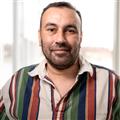
Nikolay Ternov is Associate Professor of Sociology and Political Science at L.N. Gumilyov Eurasian National University (Astana, Kazakhstan). His research uses computational methods to study digital media and political communication in the post-Soviet space.
Abstract:
How does digital propaganda manufacture the appearance of popular opinion? Drawing on a corpus of 48,000 messages posted by bot accounts on VKontakte (2019-2024), this talk examines how Joe Biden is represented in the astroturfing discourse of the RuNet. Combining sentence embeddings, UMAP/HDBSCAN topic modeling, lexical analysis and sentiment and toxicity classification, I show that the campaign relies less on overt aggression than on what we call "low-threshold rhetorical toxicity": irony, infantilization ("grandfather") and cognitive stigmatization ("senile", "poor Biden"). Biden is assembled as a symbolic anti-leader, a figure of weakness and geopolitical threat, while pseudo-patriotic formulas such as "our country" disguise coordinated activity as the voice of ordinary citizens. Bot activity follows the political agenda closely, functioning as an infrastructure of narrative maintenance rather than a simple relay of messages. I conclude by discussing the limits of bot identification on closed platforms and how these findings connect to ongoing work on Telegram in Kazakhstan.
Share Event