
FACULTY OF TECHNOLOGY AND SOCIETY | Talk
Responsible AI – moving beyond hype to human-centered innovation
Friday 16 October, 09:15 - 10:15
Niagara, auditorium B1, Nordenskiöldsgatan 1
Artificial Intelligence is changing how we work, study, and connect. However, conversations about AI are too often driven by hype or fear. Generative AI and large language models raise urgent questions: What really is AI? Who decides how it develops? And how should we balance innovation with societal responsibility?
This talk challenges the view of AI as an unstoppable force and instead frames it as the outcome of human choices, shaped by values and priorities. Responsibility in AI is not a limitation but the key to creating systems that foster trust, fairness, and long-term progress. Far from slowing innovation, ethical design, governance, and regulation are what make sustainable innovation possible. By addressing trade-offs openly and focusing on societal well-being, we can ensure that AI contributes to human flourishing, not just technological advancement.
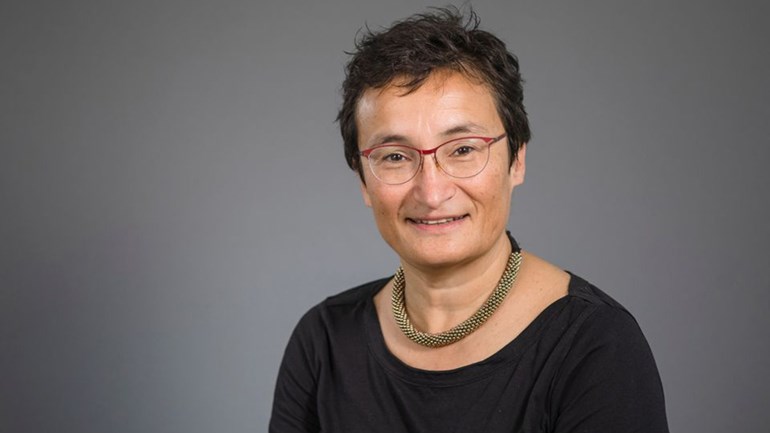
Virginia Dignum is professor of responsible artificial intelligence at Umeå University, where she leads the AI Policy Lab. She is also senior advisor on AI policy to the Wallenberg Foundations and chair of the ACM’s Technology Policy Council.
Virginia Dignum is Professor of Responsible Artificial Intelligence at Umeå University, Sweden, where she leads the AI Policy Lab. She is also senior advisor on AI policy to the Wallenberg Foundations and chair of the ACM’s Technology Policy Council. She has a PHD in Artificial Intelligence from Utrecht University (2004), was appointed Wallenberg Scholar in 2024, is member of the Royal Swedish Academy of Engineering Sciences (IVA), and a Fellow of the European Artificial Intelligence Association (EURAI), and of ELLIS (European Laboratory of Learning and Intelligent Systems). She is also co-chair of the IEEE Global Initiative on Ethics of Autonomous and Intelligent Systems 2.0, member of the UNESCO’s expert group on the implementation of AI recommendations, the OECD’s Expert group on AI, and founder of ALLAI, the Dutch AI Alliance.
She has been a member of the United Nations Advisory Body on AI, the EU’s High Level Expert Group on Artificial Intelligence, co-chair of the WEF’s Global Future Council on AI, and leader of UNICEF's guidance for AI and children. In 2026, she received the Nordic DAIR Awards Lifetime Achievement in AI. She has over 300 peer-reviewed articles in major international journals, conferences and workshops, with in total over 30000 citations. Her new book “The AI Paradox” (2026) is published by Princeton University Press.