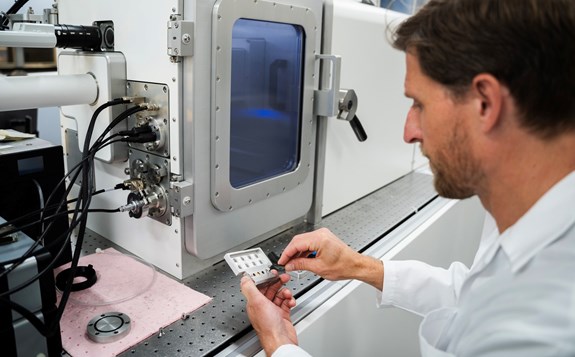
Iron-fortified food to help combat nutrient deficiency
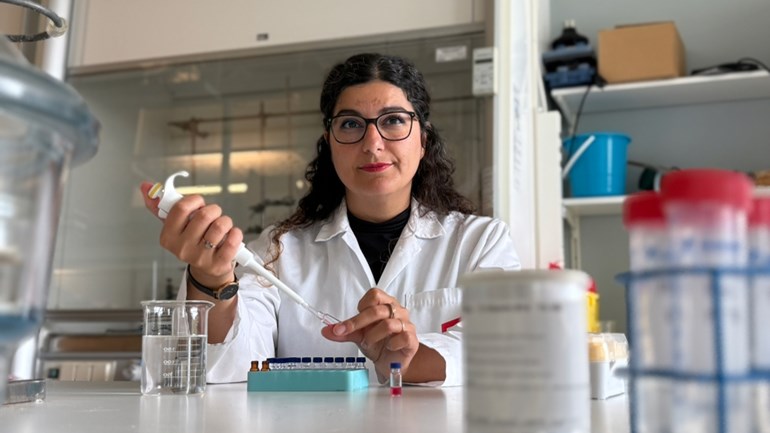
Researcher Rita Del Giudice (pictured) has, together with her colleague Marité Càrdenas, developed a nanocapsule that facilitates the absorption of iron in the body that can be delivered in everyday foods.
Iron deficiency is a major global health problem that largely affects women of reproductive age, and young children. To tackle this issue, researchers at Malmö University have developed an effective way to improve the absorption of this mineral in the gut using a nanocapsule embedded in food.
Iron deficiency is often treated by an over-the-counter tablet which is to be taken daily.
“There are many drawbacks to this: for one thing, you have to remember to take the tablet; for another, the body absorbs a maximum of three per cent from such a tablet because the iron in that form is difficult for the body to absorb,” explains Rita Del Giudice, associate professor at the Department of Biomedical Sciences.
The nanocapsule, marketed under the brand name BoostNCaps®, has been developed in collaboration with fellow researcher Marité Càrdenas, a professor at Malmö University. It is designed to enable iron to be absorbed directly from fortified foods. The iron-binding protein lactoferrin, which is also found naturally in breast milk, is used to carry and protect the iron and facilitate its absorption in the gut.
The nanocapsules are tiny, approximately 40 nanometres in diameter, roughly 1,000–2,500 times narrower than a human hair, and work in a wide range of foods, except those that require cooking – that is, boiling or frying for a prolonged period at high temperatures – as high heat destroys them. The capsule are designed to not alter the taste or colour of the food. Laboratory findings indicate that this method could increase the proportion of supplied iron available for absorption. Del Giudice explains why the capsule is necessary:
People have tried before to adding directly mineral iron to the foods, but since you need to put a lot for it to work, it changes the taste and the colour of the food, apart from not being absorbed properly.
Rita Del Giudice
Better absorption
“Because of the low pH of the stomach acid, and the digestive enzyme pepsin – which breaks down and splits the protein – the capsule is needed to protect the iron from being separated from the protein before it reaches the intestinal cells. It is only when the capsule encounters the bile in the intestine that it dissolves and releases the iron or the nutrient with which the capsule has been loaded, so that it can be absorbed by the intestinal cells.”
Researchers have also tested enriching the capsule with vitamin B12, which many people are at risk of deficiency. The difference is that this vitamin does not need to be carried by a protein to be protected from breakdown in the stomach.
The nanocapsule do not need to be carried by a protein, but it is the iron that needs to be boun to a protein to be bioavailable. In the intestine, especially in infants, iron-bound lactoferrin can bind to lactoferrin receptors on intestinal epithelial cells and be internalised together with its bound iron.
However, lactoferrin does not normally transport absorbed iron all the way to other organs and inside cells. After iron passes through the intestinal cell and enters the bloodstream, the main systemic transporter is transferrin.
Fortified foods can form part of what is commonly known as ‘functional food’, that is, foods developed to provide a specific physiological health benefit. It is in such foods that the nanocapsule is intended to be incorporated.
Multiusage
Del Giudice is keen to point out, however, that if one is to treat severe iron deficiency, obtaining iron through diet alone will not be sufficient.
The research duo have filed patent applications for the capsules in most markets worldwide, including Europe, the US, the UK, Canada and India, and are currently in discussions with several major companies in Europe, such as Arla Foods and Tetra Pak, about conducting a pilot project with the capsule on a larger industrial scale.