Malmö University academic has advisor to the UN Secretary-General role renewed
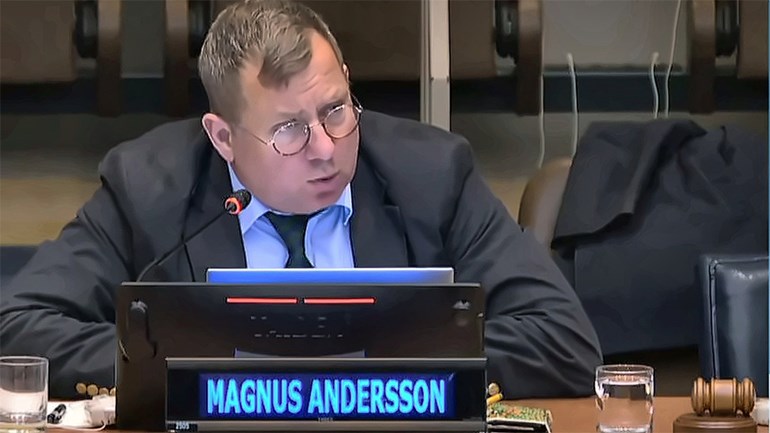
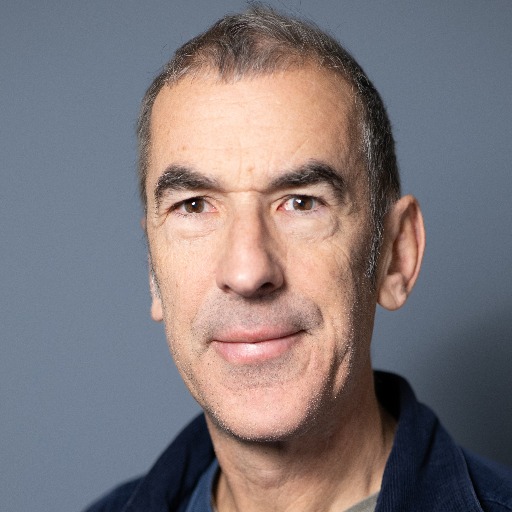
Malmö University associate professor Magnus Andersson speaks at the UN Secretariat in 2026. “A new Secretary-General will be appointed, and it will be exciting to get to know the new leader of the UN,” he says.
Can satellite imagery and other new, innovative technologies help to improve and streamline agriculture and urban planning in poorer countries? Both researcher Magnus Andersson and the UN believe so. Andersson is the sole member of the UN’s advisory group on sustainable development goals who has had his mandate renewed for a further two years.
“It’s really exciting. It’s recognition of the successful work and of the importance of taking a long-term approach to these issues,” says Andersson, associate professor of economic geography at Malmö University.
Land is expensive and a resource that needs to be used sparingly. The question is how we can use land and resources more sustainably.
Magnus Andersson
Andersson is an expert in using satellite imagery to assess economic growth and in how new technology can contribute to more efficient agriculture and urban planning in poorer countries. In 2024, he was appointed as a member of the international group of ten experts tasked with supporting the UN Secretary-General in the work to achieve the global Sustainable Development Goals. It was the Ministry for Foreign Affairs, via the Swedish Mission, which nominated Andersson: the UN Secretary-General made the appointment.
“This shows that satellite imagery is considered important for analysing built environments in Africa. We now know more about housing needs in Africa. Using 3D images, we can measure density, volume, and height,” says Andersson, who collaborates with the Swedish National Space Board and the European Space Agency, among others, for his research projects.
Since 2024, Andersson has been writing recommendations and policy briefs, delivering speeches at the UN, and taking part in meetings all over the world, but he has also visited primary schools to talk about sustainability and technology.
“If we are to achieve the Sustainable Development Goals, we must work at all levels, and that starts at a grassroots level. Land is expensive and a resource that needs to be used sparingly. The question is how we can use land and resources more sustainably.”
The group includes experts from countries such as India, Russia, and China, but no one from the US. “This reflects the fact that the US does not consider work within the UN to be particularly important,” says Andersson.