
Good dental status into old age – but increased risk of tooth loss
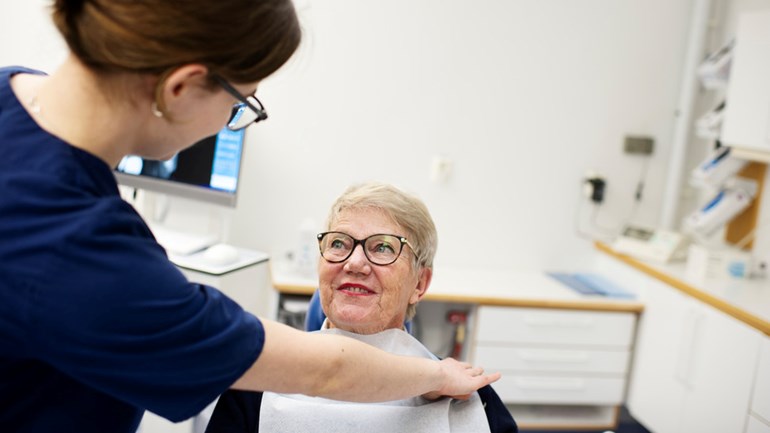
More and more elderly people are keeping their own teeth well into their later years. But at the same time, gum health deteriorates with age – which can have serious consequences such as tooth loss and an increased risk of dying earlier, new research from Malmö University shows.
“It is therefore important that elderly people maintain contact with dental care and are examined regularly; this also applies to patients who are dependent on relatives or residential staff,” says Sladjana Critén, who recently completed her doctorate at the Faculty of Odontology.
Good oral status is not just about having your own teeth. Maintaining oral health well into old age also requires that the gums and supporting tissues remain healthy.
Sladjana Critén
In her thesis, Critén has examined the oral status of elderly people over time, based on data from the Swedish National Study on Aging and Care (SNAC).
“By following different age groups and the same individuals for several years, it is possible to see both how oral status changes between generations and how it develops in the same people over time,” she says.
The results show that elderly people are keeping their own teeth to an increasing extent than before. Both 60- and 81-year-olds have more remaining and more intact teeth compared to the corresponding age groups born in the previous period.
When the same people were followed over time, for 12 and 18 years respectively, the number of their own teeth decreased by an average of 1.5 teeth. At the same time, the use of dental implants increased in the 12-year follow-up and caries attacks also increased with increasing age, although not to any dramatic extent.
“It is positive that older people now retain their own teeth, even at a very advanced age. There is a large proportion within this examined group who retain functional dental status, that is, have at least 20 of their own teeth or more. This indicates that preventive dental care has largely worked,” says Critén.
At the same time, one of the sub-studies shows that the health of the gums and supporting tissues deteriorates with increasing age. This can in turn lead to deeper gum pockets, bone loss around the teeth and an increased risk of periodontitis, a gum disease that can lead to tooth loss.
Periodontitis became more common with age and people with lower levels of education and smokers had a higher risk of this disease, regardless of gender and age.
In a long-term follow-up over 23 years, it was also found that older people with periodontitis have a higher risk of dying earlier than those without the disease. A relationship that remains even when factors such as gender, medication use, and economic conditions have been taken into account. This is something that Critén and her colleagues want to look at further in further studies to see if other underlying factors are involved in this context.
“Good oral status is not just about having your own teeth. Maintaining oral health well into old age also requires that the gums and supporting tissues remain healthy. The results emphasize the importance of regular dental visits, early detection, and preventive measures in the elderly,” adds Critén.