Synthetic antibodies a good fit for precision medicine

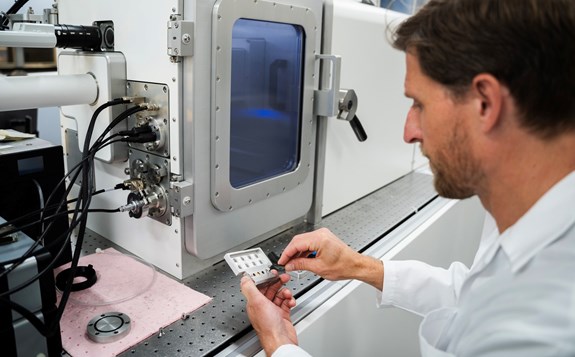
An international research team led by Anil Incel (pictured) and Börje Sellergren at Malmö University has developed a technique capable of detecting disease-related molecular changes that are not detected by the methods currently in use.
In an article published in the prestigious journal Nature Chemical Biology, researchers from Malmö University present a method for detecting cellular protein changes with high precision using synthetic antibodies. In the long term, the findings are an important step towards more reliable cancer diagnostics and personalised treatment of the disease.
An international research team led by Anil Incel and Börje Sellergren at Malmö University has created synthetic antibodies capable of isolating protein fragments carrying phosphate groups at precisely defined positions, even when surrounded by thousands of other molecules with strikingly similar structures.
We hope that our technology will increase the acceptance of synthetic antibodies within the life sciences, as it offers a cost-effective and robust alternative.
Anil Incel
This work represents an important step towards analytical and diagnostic tools capable of revealing disease-related molecular changes that are not detected by the methods currently in use.
“The question is not simply whether a protein is phosphorylated. It is where that phosphorylation occurs and how much of the protein is modified. Two protein fragments may appear almost identical, yet they can carry completely different biological information. In our case we wanted to discriminate phosphorylations occurring only one amino acid apart,” says Anil Incel, researcher at the Department of Biomedical Science.
Abnormal phosphorylation has been linked to many diseases, including cancer, which has led to the development of drugs (known as kinase inhibitors) that can inhibit these processes.
“Detecting phosphorylation is only the beginning. We must also determine exactly where the phosphate group is bound, as neighbouring sites on the same protein can convey completely different biological messages. This can vary from patient to patient and is therefore a crucial part in being able to develop personalised treatments,” says Professor Börje Sellergren.
According to Sellergren, scientists usually rely on antibodies or mass spectrometry to investigate these protein modifications. Both methods have revolutionised molecular biology, but each has its limitations and struggles to identify rare phosphopeptides or closely related isomers within complex samples.
The research team at Malmö University solved this by using a chemistry-based technique to produce molecularly imprinted polymers, known as MIPs. These polymers feature nanoscale cavities whose size, shape and chemical properties are tailored to recognise matching molecules. Much like a lock designed for a single key, these cavities preferentially bind molecules with exactly the right molecular features.
According to Incel, MIPs offer several advantages, including high chemical stability, reproducibility, a lower risk of interference, compatibility with current laboratory methods, and the ability to be stored for long periods without losing their function.
“We hope that our technology will increase the acceptance of synthetic antibodies within the life sciences, as it offers a cost-effective and robust alternative,” says Incel.