FACULTY OF CULTURE AND SOCIETY | Dissertation defence
Dissertation defence – Roel Roscam Abbing
Wednesday 23 September, 13:00 - 16:00
Zoom
Niagara auditorium C (NI:C0E11), Nordenskiöldsgatan 1
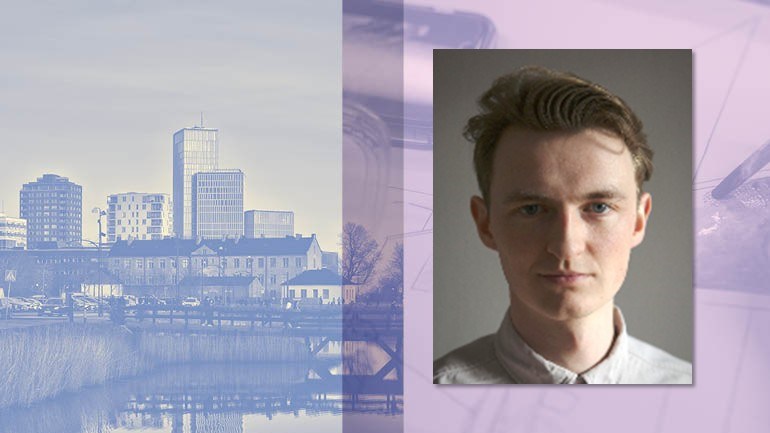
Welcome to Roel Roscam Abbing’s dissertation defence!
Roel is a doctoral student at the School of Arts and Communication at the Faculty of Culture and Society.
Title of the disseration
Configuring the Fediverse: online federation, alternative social media and participatory design
Faculty opponent
Dr Ksenia Ermoshina, Senior Researcher, Centre for Internet and Society CNRS
Examining committee
Assoc. Prof. Maria Engberg, Malmö University
Assoc. Prof. Rob Comber, KTH Royal Institute of Technology
Prof. Geoff Cox, London South Bank University
Assoc. Prof. Naja Holten-Møller, Copenhagen University (reserve member)
Dr Per Linde, Malmö University (reserve member)
Public defence chairperson
Prof. Ann Light
Doctoral thesis
Configuring the Fediverse: Participatory design, online federation and alternative social media
Abstract
The aim of this thesis in Interaction Design is to understand how online federation configures alternative social media (ASM). I use the ecosystem of the Fediverse, a network of interoperable alternative social