Researchers and industry representatives meet at BRCB’s annual conference
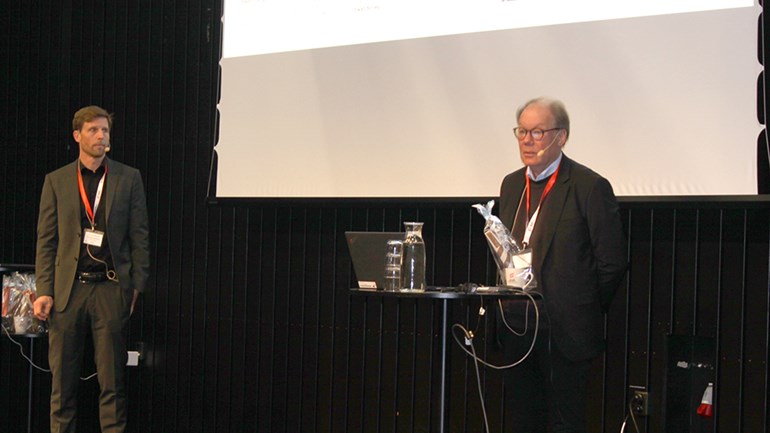
Professor Søren Brunak (right), from the University of Copenhagen, was one of the keynote speakers at BRCB’s annual conference. In his presentation, he demonstrated how artificial intelligence and large-scale data from electronic health records can be used to identify patterns of disease, predict disease progression and pave the way for improved healthcare.
RESEARCH. Around 120 participants gathered at Studio in Malmö on 21 October for the annual research conference organised by the Biofilms Research Centre for Biointerfaces (BRCB). Bringing together internationally renowned researchers, industry representatives and students, the event provided an inspiring forum for scientific exchange, networking and closer collaboration.
Since its inception in 2005, the conference has grown into an established meeting place for researchers and companies working in BRCB’s research fields, which focus on biological interfaces. This year, approximately 20 per cent of participants came from industry, with many of the companies already collaborating with the centre’s researchers on various research projects.
“Our conference has become a valued tradition and an important meeting place for researchers and industry representatives. The fact that we continue to attract so many participants from different companies year after year is, to me, a clear indication of both the high quality of research conducted at BRCB and its relevance to industry. The event offers an opportunity to learn about the latest research while meeting existing collaborators and exploring opportunities for new partnerships,” says Sebastian Björklund, Professor at the Department of Biomedical Science and Director of BRCB.
Speakers included researchers affiliated with BRCB and invited experts from institutions including Karolinska Institutet, KTH Royal Institute of Technology, the Technical University of Denmark (DTU), the University of Copenhagen and Amsterdam UMC. Master’s students from the Biomedical Surface Science programme also attended, giving them an opportunity to meet internationally leading researchers and industry representatives.
However, the significance of the event extended well beyond the scientific presentations. Equally important were the conversations during breaks, where new ideas emerged and existing collaborations were taken forward.
“Each year, the conference focuses on a particular scientific theme. This year, the emphasis was on non-invasive diagnostics and how new biomarkers, sensor technologies and analytical methods can contribute to the future of preventive and personalised healthcare. At the same time, bringing academia and industry together is an equally important aspect of the event. By organising the conference annually, we maintain strong links with fellow researchers and industry partners while creating opportunities for new collaborations. Over the years, the conference has become a natural meeting place and one of the highlights of the year for many of us,” says Sebastian Björklund.