
Home monitoring of Parkinson’s disease symptoms could improve care
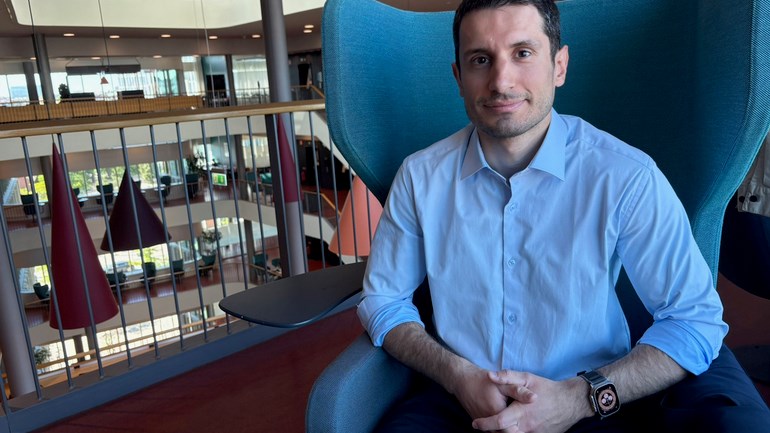
Using modern consumer technology, such as smartphones, Gent Ymeri has investigated the possibility of measuring common symptoms in people with Parkinson’s disease using sensors built into these devices.
A digital technology for smartphones and other portable devices, developed by Malmö University researchers, can quantify the symptoms of Parkinson’s disease in the home environment.
Parkinson’s disease is a progressive, neurodegenerative brain disorder that is rapidly increasing in prevalence and affects millions of people worldwide. Effective management of the disease relies on a thorough and up-to-date assessment of symptoms based on clinical evaluations.
Our studies show that current knowledge is still insufficient when it comes to objectively quantifying symptoms under everyday conditions.
Gent Ymeri
“Assessments at clinics often take place sporadically, and what a person reports is subjective and usually reflects what has happened recently or what they can recall at that moment. Furthermore, the patient’s ability to describe their symptoms plays a role in the assessment,” says researcher Gent Ymeri at the Faculty of Technology and Society at Malmö University.
However, using modern consumer technology, such as smartphones, Ymeri and his research colleagues have investigated the possibility of measuring common symptoms using sensors built into these devices.
“Our studies show that current knowledge is still insufficient when it comes to objectively quantifying symptoms under everyday conditions,” says Ymeri.
In an initial step, analyses of existing data from previous studies (so-called secondary data) were used to guide the development of an app named ParkApp, including the selection of relevant motor tests to include in the app. The app is based on the digital platform Mobistudy, which was developed by other researchers at the Department of Computer Science and Media Technology.
In collaboration with neurologist Per Svenningsson at the Karolinska Institute, the app was tested on around 30 people, who were asked to record various physical abilities in their home environment over a two-month period.
An important part of the thesis also concerns how collected sensor data can be analysed using AI. Using their own mobile phones, participants completed touchscreen-based motor tasks, such as tracing a pattern with their finger, as well as tremor-related tasks in which they held the phone in different positions. The data collected from the phone’s built-in sensors were then used to extract objective digital measures, which were compared with established clinical rating scales.
Ymeri has recently defended his thesis, Design and Validation of Smartphone- and Wearable-Based Digital Biomarkers for Parkinson’s Disease: Machine Learning and Interpretive Perspectives in Home Environments.