
Malmö Smart Start Guide
Your guide to sustainable living in Malmö
Malmö offers many ways to meet people, explore the city and make sustainable choices in everyday life. Tips and links cover community activities, libraries, cycling, second-hand options, food, outdoor activities and recycling. Many of the services and initiatives are free, low-cost or community-driven, helping you discover Malmö while making the most of your time in the city.
Malmö City Smart Map
Malmö City Smart Map
Malmö City Smart Map
Malmö City Smart Map is a digital platform that makes it easier to find things to rent, share, exchange, borrow, give away, or receive in Malmö. Much of the content featured on the map is free and community-driven. The aim is to support those who wish to live more sustainably at a lower cost or simply want to discover and enjoy some of the city’s hidden gems. Tip: use the Swedish version with a translation tool for more options.
Community
Associations in Malmö
Associations in Malmö
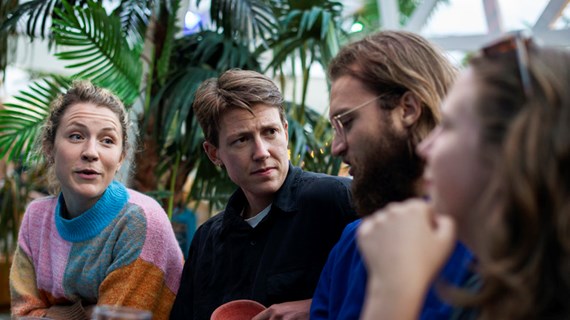
Malmö has a wide range of associations, clubs and sports groups. The Malmö City Register of Associations is a useful starting point if you want to find a local group to join. Most association names are in Swedish, but a translation tool can help you explore the different options.
International events
International events
Malmö has a large international community and a broad range of cultural and social activities. Many events are listed through Öppna Malmö, including art, talks, exhibitions and activities connected to the city’s long history of diversity. The information is mainly in Swedish, but can be read using a translation tool.
What to do in Malmö
What to do in Malmö
There are many ways to discover Malmö outside work, from cultural events and local newsletters to social media accounts that collect tips on what is happening in the city. These can be useful for finding exhibitions, concerts, talks, markets and other activities.
Gym
Outdoor gyms and sports
Outdoor gyms and sports
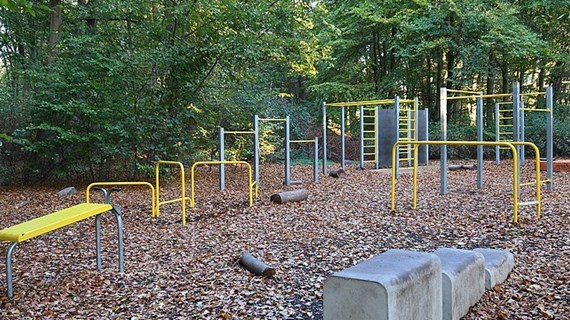
Malmö has several outdoor gyms with basic equipment, as well as many opportunities to try different sports and outdoor activities. The Malmö City Smart Map can help you find places to rent, borrow or share equipment. At Fritidsbanken, you can borrow sports shoes, clothes and equipment free of charge for 14 days.
Library
Libraries
Libraries
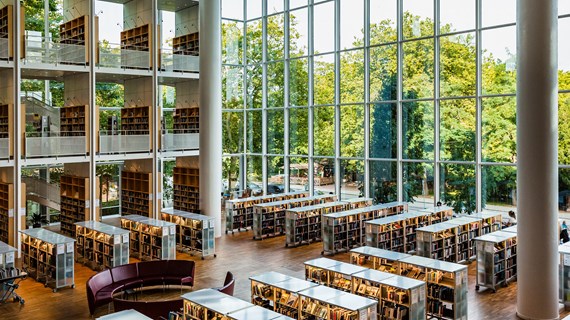
Malmö has libraries across the city, and membership is free. Libraries are places to read, study, use computers or Wi-Fi, print and scan documents, and take part in activities such as book groups, language cafés, children’s story time and author talks. They can also be useful places to meet people, practise your language skills or study in a quiet environment, either on your own or with others.
Getting around in Malmö
Getting around in Malmö
Getting around in Malmö
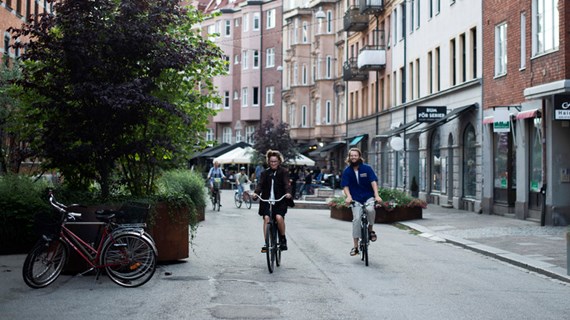
Malmö is a growing, increasingly densely populated city, and its mobility policies are designed to make walking, cycling, and public transport the preferred choices for moving people and goods around the city. Malmö has invested more in cycling infrastructure than any other city in Sweden, and 26 percent of all journeys are made by bicycle. With over 560 km of cycle paths almost any city destination can be reached by bike in under 20 minutes.
Travel locally by train, bus, bike and car
- Follow local cycling rules and prioritise safety throughout the year. Winter cycling can be challenging, but many Malmö residents cycle year-round, even during the occasional snowy day.
- Combine longer journeys by taking your bike on the train. Within the Skåne area, bikes travel free of charge on Öresundståg and Pågatåg trains as long as you have a regular passenger ticket.
- Bike & Ride garages are located next to major stops including Hyllie, Triangeln, Kronprinsen, and Malmö Central Station, making it easy to switch to public transport.
- Bus and train tickets are purchased via the Skånetrafiken app. The app allows you to lend your monthly travel pass to someone you know and take turns using it – perhaps cutting your commuting costs in half.
- Car sharing is widely used and convenient for things like moving furniture or shopping trips.
Taking care of your clothes
- Find local options on the Smart Map for clothes.
- Choose pieces you’ll wear for years, not just one season.
- Wash less often and only when needed – airing or spot cleaning can sometimes be enough.
- Take care of the clothes you already have – repair and reuse what you love.
- Look for certified labels such as Fairtrade, GOTS, Oeko-Tex Standard 100, EU Ecolabel, Global Recycled Standard (GRS) or Nordic Swan Ecolabel.
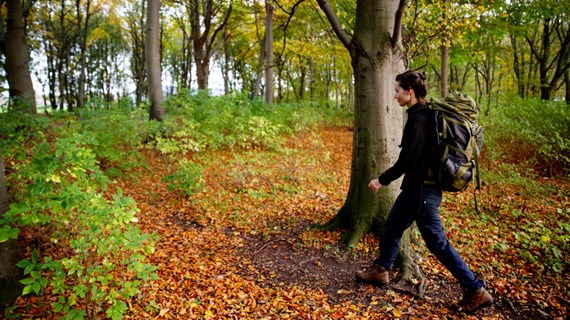
Right of Public Access
The Swedish Right of Public Access, or Allemansrätt, is fantastic! It gives everyone the opportunity to experience nature, allowing you to hike, cycle, canoe, pick berries and camp freely, with certain limitations of course. Around sensitive environments and private residences, it is important to show consideration for the landowners, animals, nature and other people. This is unique to Sweden, so it is our collective responsibility to preserve this ancient custom.
Recycling
Recycling
Recycling
In Sweden, recycling is a prerequisite and an important part of everyday life. It’s not just about reducing rubbish; it’s about taking shared responsibility for the environment and making small choices that contribute to a more sustainable future.

How to recycle
Food waste
Please use the brown paper bags, which can be collected from the recycling building outside your residence or a recycling point. For example: fruit and vegetable peels, eggshells, seafood leftovers, coffee, tea bags, and kitchen paper.
Paper packaging
All smaller cardboard packaging, both hard and soft: please remember to flatten the pack. For example: milk cartons, egg cartons, corrugated cardboard, wrapping paper.
Plastic packaging
All smaller plastic packaging, both in hard and soft plastic: please ensure you rinse all plastic before it is recycled. For example: plastic bags, plastic bottles without a refund, bag-in-box bags, crisp packets, styrofoam, medicine blister packs.
Glass packaging
Glass bottles and jars are sorted as either clear or coloured glass. Please drain all liquids, remove lids and rinse first before recycling. For example: wine bottles, spices jars, jam jars.
Metal
All metal packaging, both hard and soft: please rinse all holders before recycling. For example: cans without a refund, tubes, caps, aluminium foil.
General/Residual waste
Unfortunately, all waste can’t be sorted. For example: chewing gum, envelopes, post-it notes, broken drinking glasses or ceramics, condoms, sanitary towels.
Grease
Cooking oil must not be poured into the sink since this will cause the pipes to clog. Instead, let it cool and pour it back into a plastic container.
Malmö as a role model in recycling
Recycling in Malmö has developed steadily since the 1970s, establishing the city as a frontrunner in sustainable waste management. In 1973, the SYSAV waste-to-energy plant was launched, converting household waste into district heating and electricity. The Augustenborg district became a model for sustainable living, introducing local composting and, in 2008, piloting food waste separation for biogas production. This system was later rolled out across the city.
By 2014, it became mandatory for all households in Malmö to sort food waste, which is now used to produce biogas that powers buses and waste collection vehicles. The city has also taken steps to reduce construction waste through the reuse of building materials, aligning with circular economy principles. Malmö encourages residents to separate waste at source, and recycling stations are easily accessible across neighbourhoods. Schools and public campaigns have played a key role in raising awareness and fostering a culture of sustainability. The city also collaborates with local businesses to promote low-waste solutions and innovation. Today, Malmö continues to refine its recycling systems as part of its broader commitment to environmental responsibility and climate neutrality.
You can find a short explanation of the thinking behind it all on the Malmö city website.
Co-funded by the EU
This guide has been created as part of UNIC – the European University of Cities in Post-Industrial Transition, a collaborative alliance of ten universities working to foster mobility, inclusion, and meaningful societal change. The initiative aims to strengthen collaboration between student-led "green societies" across Europe.