
‘We focus too much on who commits crimes and too little on why’
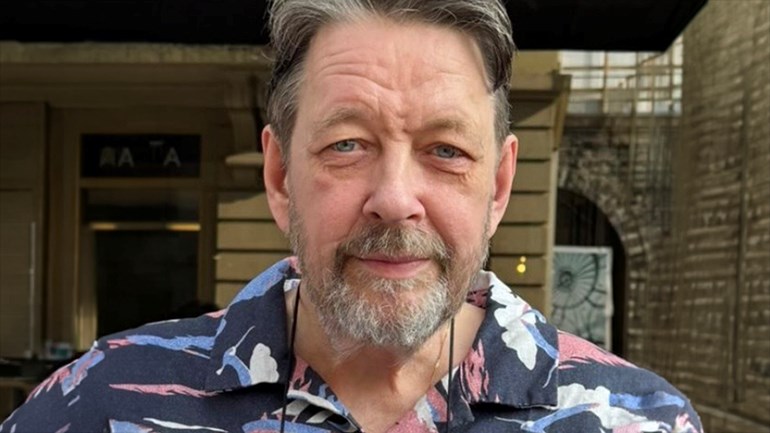
Professor Per-Olof Wikström, Department of Criminology, Faculty of Health and Society.
STAFF PORTRAIT. He grew up in Brynäs, then one of Gävle’s most socially disadvantaged neighbourhoods, and went on to become one of the world’s most internationally recognised criminologists. After 45 years of research, Professor Per-Olof Wikström continues to challenge many of the explanations that dominate public debate about crime. He is now calling for criminal justice policies that draw more heavily on knowledge of why people commit crimes, rather than focusing on the social characteristics of those who offend.
Growing up in Brynäs profoundly shaped Wikström’s research and the questions he has sought to answer. Despite the neighbourhood’s social problems, only a small minority of those who grew up there became seriously involved in crime. This observation prompted a question that would come to define his academic career: ‘Why the few and not the many?’
Understanding why some individuals become involved in crime while most do not, even when growing up in similar circumstances, has remained central to his research for the past 45 years.
Today, Per-Olof Wikström is Professor of Criminology at Malmö University and Professor Emeritus at the University of Cambridge. His research has earned him numerous prestigious international distinctions in criminology, including the Stockholm Prize in Criminology, the Beccaria Gold Medal, the Sellin-Glueck Award and the European Criminology Award.
His latest book, Character, Circumstances and Criminal Careers, co-authored with Kyle Treiber and Gabriela Roman, recently received an Outstanding Contribution Award from the American Society of Criminology’s Division of Developmental and Life-Course Criminology.
Drawing on an extensive longitudinal study of young people growing up, the book examines how individual characteristics and environmental circumstances interact in the development of criminal behaviour.
Crime demands different explanations
Wikström is critical of the tendency to regard socioeconomic factors as a primary explanation for criminal behaviour.
‘The fundamental problem with this explanation is that only a small minority of people from socially disadvantaged backgrounds become involved in crime, while many of those who do commit crimes do not come from such backgrounds,’ he explains.
At the heart of his Situational Action Theory lies a fundamental question: why do certain individuals, in certain circumstances, perceive crime as an acceptable course of action?
Wikström argues that the answer lies in the moral content of the everyday environments in which people take part and how that influence both individuals’ crime involvement and the development of their propensity to offend.
‘Most people rarely, if ever, regard violence as a possible course of action. The fact that some people do, under certain circumstances, is largely explained by the moral content of the environments in which they act and have been shaped,’ he says.
From Stockholm to Cambridge and Malmö
Wikström initially intended to pursue social psychology but found his way into criminology almost by chance.
After working at the Department of Criminology at Stockholm University, the Swedish National Council for Crime Prevention and the research unit of the Swedish Police Academy in Solna, his academic career took him to Cambridge.
There, he founded the Centre for Analytic Criminology and initiated the longitudinal Peterborough Adolescent and Young Adult Development Study (PADS+), which became instrumental in developing and testing his theory.
In 2007, he assisted Marie Torstensson Levander in establishing and developing criminology as an academic discipline at what was then Malmö University College.
He continues to teach at Malmö University and particularly values his interactions with undergraduate students, whose diverse backgrounds create opportunities for stimulating discussions.
‘It is particularly rewarding to teach the introductory course on the causes and prevention of crime together with Marie.’
‘We intervene when it is already too late’
The findings of his research have reinforced Wikström’s conviction that criminal justice policy needs to place much greater emphasis on prevention. In his view, interventions are too heavily concentrated on individuals who have already developed an established pattern of criminal behaviour.
‘We need a more proactive approach to criminal justice policy, one that also invests substantially in preventing young people from becoming involved in crime in the first place. At present, the focus is almost exclusively on getting those who are already criminally active to reduce or desist from offending, primarily through opportunity-reducing measures and reactive interventions by the criminal justice system and social services,’ Wikström argues.
He believes that a more effective preventive approach must begin with those who have the greatest potential to influence young people’s development.
‘We need to do more to support those who are best placed to prevent young people from becoming involved in crime. This means strengthening parents’ and teachers’ capacity and commitment to fostering children’s and young people’s moral development and their ability to exercise self-control.’
He also emphasises the importance of the wider social and cultural environment.
‘We must also counteract environments and media that normalise crime by justifying, excusing, tolerating or ignoring criminal acts and behaviour that violates commonly held norms,’ he says.
Despite his international recognition and a distinguished research career spanning more than four decades, Wikström is far from finished. The question that first emerged from his childhood experiences growing up in Brynäs continues to drive his intellectual curiosity.
‘Research is always a work in progress.’
And his advice on what makes research worthwhile reflects the same curiosity that has guided his own career:
‘Research is better when you approach it with the question “I want to understand why…” rather than the ambition “I want to demonstrate that…”.’
Further reading
To learn more about Wikström’s research into crime and crime prevention, the report När brott blir ett acceptabelt handlingsalternativ (When Crime Becomes an Acceptable Course of Action) is available to download free of charge via the link below.
Contact
-
Per-Olof H Wikström, FBA – Emeritus Professor
pow20@cam.ac.ukInstitute of Criminology, University of Cambridge