We use cookies on this website. Cookies help us deliver the best experience on our website. More about cookies

-
- Education
- Education
- Find programmes and courses
- Applications and admissions
- Tuition fees
- Scholarships
- Exchange studies at Malmö University
- Study Guidance
-
- After admission
- After admission
- Moving to Malmö
- Pre-orientation
-
- About studies at Malmö University
- About studies at Malmö University
- Why choose Malmö University
- Understanding university studies
- Connect with our students
On the page -
- Research
- Research
- Find researchers and research
-
- Doctoral studies
- Doctoral studies
- Doctoral courses
-
- Doctoral schools
- Doctoral schools
- Adaptation of urban space through sustainable regeneration
- Culturally Empowering Education through Language and Literature
- Doctoral school: DACHE
- Education, Learning and Globalisation
- Finding ways in a time of great future challenges (FinnFram)
- Swedish National Graduate School in Science and Technology Education Research
- Learning in Multicultural Societal Contexts
- Pedagogy and Vocational Skills
- Relevancing Mathematics and Science Education (RelMaS)
- Sustainable Movement Education
- The National Research School for Professionals in Social Services
- Research subjects
-
- Research centres
- Research centres
- Biofilms Research Centre for Biointerfaces
-
- Citizen Health
- Citizen Health
- Kids in Action
- Imagining and Co-Creating Futures
- Institute for Urban Research
- Malmö Institute for Migration Studies
- Literacy and Inclusive Teaching
- Centre for Work Life Studies
- Sustainable Digitalisation Research Centre
- Centre for Sexology and Sexuality Studies
-
- Research publications
- Research publications
- Search for research publications in Diva
- Malmö University Press
-
- Research in focus
- Research in focus
- Focus: In the classroom
- Focus: The Election 2026
- Focus: A future with AI
- Focus: Climate and society
- Focus: Peace, democracy and human rights
- Focus: The mouth
- Focus: Migration
- Focus: Elite Sport, Football and Supporter Culture
- Focus: Perspectives on Malmö
- Focus: Loneliness
- Research events
- Participate in a research study
On the page -
- Collaboration & Innovation
- Collaboration & Innovation
-
- Levels of collaboration
- Levels of collaboration
-
- Local collaboration
- Local collaboration
- Muvah
- Co-Create Malmö
- Regional collaboration
- National collaboration
-
- International collaboration
- International collaboration
- UNIC
- Innovation
- Collaboration with students
- Collaborate with researchers
- Culture collaboration
- Support Malmö University
- Alumni & Friends
On the page -
- About us
- About us
-
- Meet Malmö University
- Meet Malmö University
- The history of the University
- Malmö University in numbers
- Sustainability
-
- Management and organisation
- Management and organisation
-
- Faculty of Culture and Society
- Faculty of Culture and Society
- Department of Global Political Studies
- School of Arts and Communication
- Department of Urban Studies
-
- Faculty of Education and Society
- Faculty of Education and Society
- Department of Childhood, Education and Society
- Department of Sport Sciences
- Department of Culture, Languages and Media
- Department of Natural Science, Mathematics and Society
- Department of Society, Culture and Identity
- Department of School Development and Leadership
- The Centre for Teaching and Learning (CAKL)
-
- Faculty of Technology and Society
- Faculty of Technology and Society
- Department of Computer Science and Media Technology
- Department of Materials Science and Applied Mathematics
- Faculty of Odontology
- Management and decision-making paths
- Malmö University's strategy 2030
-
- Quality assurance work at the University
- Quality assurance work at the University
- Widened recruitment and participation
- University Dental Clinic
-
- Malmö Academic Choir and Orchestra
- Malmö Academic Choir and Orchestra
- Student work – video pieces
On the page -
- Contact
- Contact
- We help you with your questions
- Find your way around Malmö University
-
- News and press
- News and press
-
- Graphic manual
- Graphic manual
- Logo
- Colours
- Typography
- Visual language
- Film and live broadcasts
- Visit Malmö University
- Merchandise
- Supplier information and invoice management
- Whistleblowing
On the page
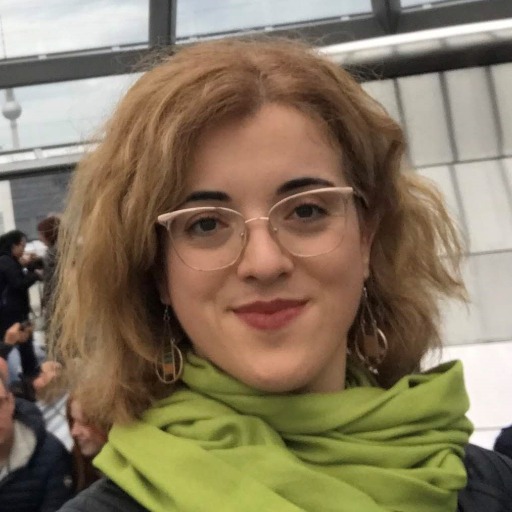
Presentation
My interest in research grew out of a question that has stayed with me for many years: How can we create teaching that feels meaningful to students and helps them see why the knowledge they encounter in school matters beyond the classroom? After many years as a teacher and lead teacher, I have carried this question into my research as a PhD student at the RelMaS Graduate School.
In my research, I explore what happens when students encounter people, knowledge, and perspectives beyond the traditional boundaries of school. I am particularly interested in transdisciplinary collaboration and co-creation between students, teachers, and professionals working with science. Through these encounters, I explore how students can be given new opportunities to learn, ask questions, test ideas, and understand the significance of science in relation to their everyday lives and broader societal issues. A particular focus is on how such processes may influence students’ learning, interest, and motivation in science, as well as their perceptions of its relevance.
This interest is closely connected to my experiences in school. During my years as a teacher and lead teacher, I developed a strong interest in school development, sustainability education, and collaboration between schools and the world of work. I have worked with teaching where students encounter societal issues, professionals, and authentic problems, and where learning develops through the meeting of different perspectives and experiences. This is also where I see a clear connection between my background as a teacher and my research: a curiosity about what happens when students become active participants in the learning process and when teaching connects to questions that matter beyond school.
My research is grounded in pragmatism and draws on perspectives on co-creation and participatory research. These perspectives help me understand learning as something that develops through people’s encounters with one another, with knowledge, and with the situations in which they find themselves.
My engagement with sustainability and collaboration has also extended beyond my own teaching. I have, for example, planned and organised international conferences for Caretakers of the Environment International and been involved in national and Nordic initiatives focusing on sustainability and learning. I have contributed to the development of educational materials for UR, including Uppdrag framtid and Klimatkompis, and written the teacher’s guide for Klimatkompis. I have also contributed to WWF Sweden’s MOOC on leading a school for sustainable development and given lectures on the Sustainable Development Goals and collaboration between schools and the world of work.
Together with the Centre for Collaboration and Coordination at the Faculty of Education and Society, I have also organised seminars for teachers and educators on how the Sustainable Development Goals can be used as a resource for interdisciplinary learning. These different experiences have given me the opportunity to work at the intersection of research, teaching, and educational practice – an area that remains central to my work.
Another important part of my academic development has been international research collaboration. I have undertaken research visits and exchanges at University College London, King’s College London, the University of Reading, Heidelberg University, and the University of Sarajevo. I have also collaborated with Uppsala University and Stockholm University, including through the RelMaS Graduate School. In addition, I have represented Malmö University in Nordic collaborations in teacher education focusing on sustainability in local communities.
Alongside my research, I teach in teacher education at Malmö University. My teaching includes science and technology, ecology and sustainable development, geography, Teaching for Sustainability, and scientific knowledge and proven experience. Combining research and teaching is important to me, not least because encounters with students and future teachers continue to challenge and develop my own perspectives on teaching and learning.
What connects my research, teaching, and previous work in schools is an interest in learning as something that develops through encounters between people, knowledge, and real-world situations. I believe education becomes particularly interesting when it creates space for questions that do not have simple answers – and when students are given opportunities to explore, think, create, and have an influence on the world around them.
Publications
-
2026 | Conference paper
Re-actualizing habits and knowledge through co-creation settings in middle-school science practice
Vildana Bašić
-
2026 | Article in journal
Approaching middle-school student science learning and sustainability dilemmas through co-creation processes with science professionals
Vildana Bašić, Eva Davidsson
-
2025 | Conference paper
Exploratory seminar: Postgraduate science education for an uncertain future?
Anna Danielsson, Paola Valero, Azra Ates, Vildana Bašić, Clas Olander
-
2024 | Conference paper
Creating agency and values for students in co-creation processes
Vildana Bašić, Eva Davidsson
-
2024 | Conference paper
Science-profil på högstadiet: på väg mot högre studier inom naturvetenskap
Vildana Bašić