Programme, bachelor’s level
180 credits
Malmö | daytime | 100%
30 August 2027 - 9 June 2030

International students

International students

Full tuition fee: 325,000 SEK
EU/EEA students are generally not required to pay tuition fees.
I really enjoyed the programme’s critical approach to the field of peace and conflict studies and that of peacebuilding more generally. I loved the interdisciplinary perspective, which facilitates a more flexible and creative approach to the studies.

Mette Skaarup, former student

About the education

Armed conflict and other forms of organised violence affect the daily lives of people around the world. The Peace and Conflict Studies programme will provide you with an understanding of organised violence, conflict resolution and peace from systemic and grassroots-level perspectives. You will develop the skills to analyse how different types of armed conflict and organised violence emerge and evolve over time. You will also study under which conditions sustainable peace might emerge.

This three-year bachelor’s programme gives you in-depth knowledge of Peace and Conflict Studies. You will learn about the field’s historical and theoretical foundations, and its key analytical and methodological approaches. The courses cover specialised subject areas such as enemy images, the role of the United Nations and Public International Law, civilians’ experiences and agency during and after war, media and propaganda, the phenomenon of radicalisation, and everyday violence and resistance.

The Peace and Conflict Studies programme is multidisciplinary and draws on perspectives from political science, history, law, anthropology and philosophy. Throughout the programme, you will engage with questions such as:

  • Why and how do armed conflicts and other forms of organised violence arise? What are the systemic and structural causes? What is the impact of media, propaganda and enemy images?
  • How do combatants and victims of armed conflict experience and handle their situation? How can violence and oppression be resisted?
  • What is required to achieve peace? How can violent conflicts be managed and turned into peaceful conditions by peaceful means?
  • What role do international organisations and civil society play in working for peace both locally and globally? How do they go about their work in practice?

Programme structure

First year

During the first year, you will be introduced to the field of Peace and Conflict Studies, and its scientific development as a discipline. You will gain insights into the key theories and concepts relating to historical and contemporary conflicts. Furthermore, you will obtain an understanding of how threats are represented and organised violence is legitimated. You will also acquire methodological skills and learn how to analyse conflicts independently through project work. You will strengthen your academic writing, critical thinking, and collaboration skills.

Second year

You will expand your knowledge by engaging with specialised and research-led topics that reflect contemporary challenges and debates. For example, radicalisation, war and media, and civilians in conflict. The courses emphasise critical analysis, advanced theoretical perspectives, and research-based learning. The second year ends with an elective semester, during which you can choose elective courses in Sweden, do an internship, or study abroad.

Third year

The third year begins with an elective semester, allowing you to broaden your experience through elective courses in Sweden, an internship, or studies abroad. In the final semester, you will deepen your understanding of research methods, methodologies, and research ethics. The programme concludes with an independent bachelor's thesis on a topic of your choice.

Within the framework of the programme, you have two elective semesters.

You can do an internship with a relevant national or international organisation, authority, association or company in Sweden or abroad. This will give you practical experience beyond the classroom. One of the two elective semesters can be devoted to an internship.

You can also study abroad for either one or two semesters. Malmö University cooperates with many universities around the world to provide exchange opportunities for students.

After graduation, you will have gained knowledge and skills relevant for careers in fields such as:

  • analysis, prevention and resolution of conflicts
  • peace building
  • reconciliation
  • foreign policy
  • international relations
  • global affairs
  • refugee and asylum issues

Since the programme is multidisciplinary, you will develop sought-after competencies for a wide range of sectors in a growing labour market. Future employers may include private sector businesses, local and international organisations and agencies, as well as national authorities and government organisations.

You will also have a solid foundation for further studies at master’s level.

Courses within the programme

Entry requirements and selection

Here you can find the entry requirements, as well as how the available study places are distributed between applicants in the selection. 

If you have any questions about general admission, you are welcome to contact us.

Contact form

Entry requirements

General entry requirements + Civics 1b or Civics 1a1 and 1a2 + English 6/English Level 2.

Selection

66% Upper Secondary Grades - 34% Swedish Scholastic Aptitude Test (SweSAT)

Please note that the SweSAT is a test only available in Swedish, and is in no way mandatory for admission.

A broad programme that is a real eye-opener

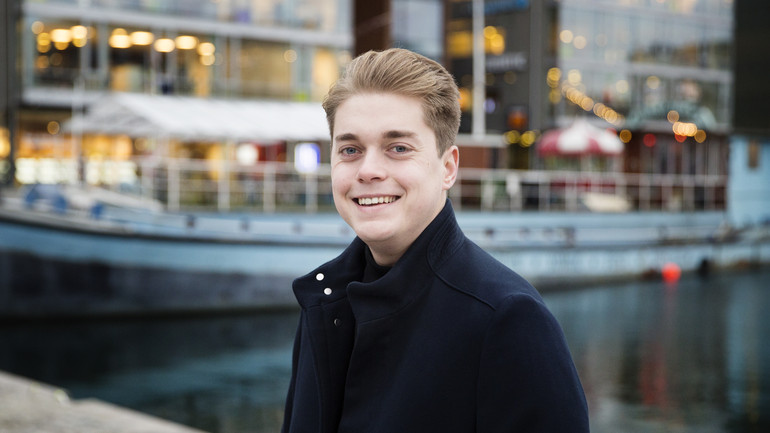
Yannick Deller got the opportunity to study five different courses in Hong Kong during his exchange semester. Now, he recommends anyone who wishes to learn more to take the chance.

A broad programme that is a real eye-opener

Yannick Deller got the opportunity to study five different courses in Hong Kong during his exchange semester. Now, he recommends anyone who wishes to learn more to take the chance.

What did you enjoy most about the programme?

"Through Peace and Conflict Studies I was given the opportunity to develop my own critical thinking and question certain dominant beliefs as well as value systems. It was truly an eye-opener in this sense. The programme is broad and offers many different attempts at explaining certain social, cultural and economic conflicts. Due to the international and multicultural nature of the programme, it also offered me the chance to discuss all these issues with people from all over the world."

When you studied abroad: where did you go and what did you learn?

"I went on exchange to Hong Kong and took five different courses there. Overall, I would say I developed an understanding of different cultural, societal and political viewpoints on everyday challenges people face. Through meeting and interacting with local students, I gained a more thorough understanding of the very unique culture of Hong Kong. I highly recommend that anyone who wishes to learn more go on exchange!"

Who would you recommend this programme to?

"I think this is a programme for everyone who is not satisfied with the 'status quo' or anyone who wants to make the world a better place than it was yesterday. My point is not that this programme will give you a definitive answer or solution for this endeavour but it will teach you how to think about these issues. Not to say that it will teach you a certain way of thinking, but rather it will teach you to question your thinking. It will broaden your way of perceiving problems, solutions, and individual experiences."

Do you have any advice for someone who is looking to apply to the programme?

"Be aware of the workload, it is going to be a lot. You will be doing a considerable amount of reading and researching, but it’s worth it. Also, be aware that this programme has some emotionally heavy readings and witness accounts of violence. It can sometimes be difficult to process such information, hence study groups and friends are a good way of sharing and negotiating these experiences. Finally, if your native language is not English, don’t worry about it! You will get used to it and it’s a pretty great way of developing your language skills."

What do you want to work with in the future? 

"Right now, my current plan is to pursue an academic career. I love research and teaching. I like to think about knowledge as a product of human interaction, and I believe that an academic career will allow me to learn more about the world through the interaction with other people, be it by researching a certain topic or teaching students."

Encouraging and supportive professors helped Mette to develop her ideas

Mette Skaarup’s dream job is to work with integration and community-building projects. Thanks to her studies at the Peace and Conflict programme, she’s now headed in the right direction.

Encouraging and supportive professors helped Mette to develop her ideas

Mette Skaarup’s dream job is to work with integration and community-building projects. Thanks to her studies at the Peace and Conflict programme, she’s now headed in the right direction.

What did you enjoy most about the programme?

"I enjoyed the programme’s critical approach to the field of peace and conflict studies and that of peacebuilding more generally. I loved the interdisciplinary perspective, which facilitates a more flexible and creative approach to the studies. We read a range of literature from a variety of disciplines and this has given me a robust foundation for my further academic endeavour. I also loved studying alongside students from all over the world — this brought a richer texture to our discussions both within and outside the classroom."

When you studied abroad: where did you go and what did you learn?

"During my fourth semester, I did an exchange semester at the wonderful Quest University in British Columbia, Canada. It was a super-intensive period of studying and learning, living on campus and attending classes every day of the week. I had the opportunity to take four different modules, which allowed me to delve deeper into my topics of interest, such as counter-terrorism, cyber politics and foreign policy in the Middle East. I also became a much better skier, enjoying the University’s proximity to Whistler Ski Resort!"

How were the teachers and the classroom environment at Malmö University?

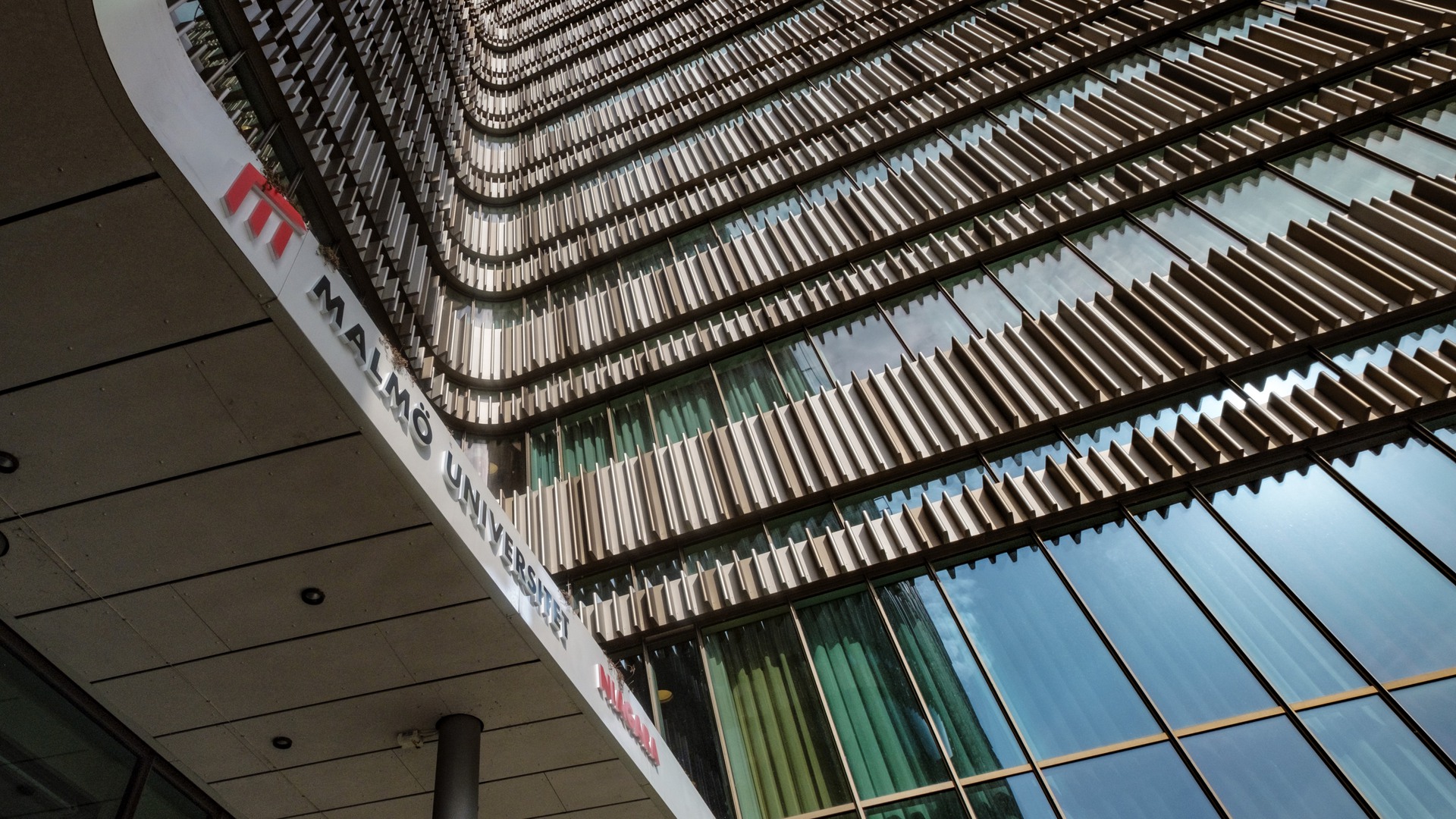
"We had most of our second and third-year classes in the newly built Niagara building, close to both the central train station and the city centre (and good falafel!). We were fortunate enough to be taught by some very engaged professors from different academic backgrounds. They all brought different perspectives and ideas to our lessons and were always very encouraging and supportive, challenging me to develop my ideas and work."

Do you have any tips or advice for someone who is looking to apply for the programme?

"Just apply! If you’re prepared to work hard and to be challenged, you will gain a lot from this programme. I would also encourage students to get involved in student associations, volunteer organisations or other local initiatives. This will enrich your study experience and make you feel more connected to the multicultural city of Malmö."

What do you want to work with in the future? What is your dream job?

"I might continue within academia, combining what I’ve learnt in Peace and Conflict Studies with insights from my master’s programme in Migration Studies to study security and migration-related issues. Otherwise, I dream of working with integration and community-building projects in one of the countries I’ve come to think of as home."

Contact