
FACULTY OF CULTURE AND SOCIETY | Seminar
Migration seminar: The Politics of Migration Amnesties in Sweden
Thursday 5 February, 13:15 - 15:00
Niagara, 9th floor, Nordenskiöldsgatan 1, or zoom
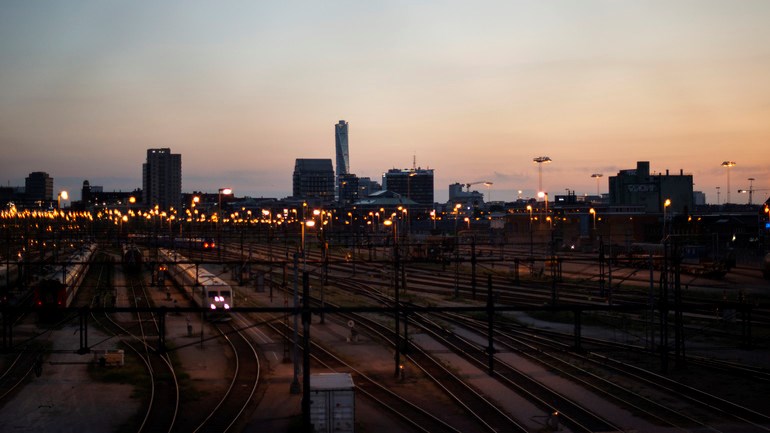
The Politics of Migration Amnesties in Sweden: Decisions and Arguments, 1976–2019
Welcome to the Migration seminar!
Profile:
Henrik Emilsson, Associate senior lecturer, Department of Global Political Studies, Malmö University
Abstract:
This article analyses the emergence and recurrence of migration amnesties in Sweden between 1976 and 2019, which regularised around 100,000 persons to a secure residence status. Using Kingdon’s Multiple Streams Framework, it examines six policy episodes to explain how problems, political agendas, and policy proposals aligned to make amnesties possible. Drawing on parliamentary debates and government documents, the study traces the arguments invoked to legitimise these measures. It finds that Swedish amnesties were not singular humanitarian responses but recurring tools of governance, employed to resolve tensions arising from backlogged asylum systems and humanitarian concerns.
Rather than departures from normal policymaking, they represent moments when moral imperatives and administrative necessity converged. Humanitarian motives coexisted with the need to reset the asylum system ahead of administrative reforms, and amnesties often coincided with efforts to reduce new asylum arrivals. Over time, decision-making has shifted from government-led initiatives to politicised parliamentary debates and civil society mobilisations. By revealing the cyclical and pragmatic character of these decisions, the article contributes to understanding how states manage irregular migration through ad hoc amnesties that oscillate between humanitarian considerations, control, and bureaucratic self-correction.
Attendance:
This is a hybrid seminar, you are welcome to connect via Zoom or join us at MIM seminar room, floor 9, Niagara, Nordenskiöldsgatan 1. To attend on campus, please gather by the reception area at 13.05.
If you have any questions, send an email mim@mau.se
Zoom link
https://mau-se.zoom.us/j/64896407478
Mötes-ID: 648 9640 7478