We use cookies on this website. Cookies help us deliver the best experience on our website. Read about cookies.

-
- Education
- Education
- Programmes and courses
- Applications and admissions
- Tuition fees
- Scholarships
- Exchange studies at Malmö University
- Study Guidance
-
- After admission
- After admission
- Moving to Malmö
- Pre-orientation
- Arrival guide
-
- About studies at Malmö University
- About studies at Malmö University
- Why choose Malmö University
- Understanding university studies
- Connect with our students
On the page -
- Research
- Research
-
- Doctoral studies
- Doctoral studies
- Doctoral courses
-
- Doctoral schools
- Doctoral schools
- Adaptation of urban space through sustainable regeneration
- Culturally Empowering Education through Language and Literature
- Doctoral school: DACHE
- Education, Learning and Globalisation
- Finding ways in a time of great future challenges (FinnFram)
- Swedish National Graduate School in Science and Technology Education Research
- Learning in Multicultural Societal Contexts
- Pedagogy and Vocational Skills
- Relevancing Mathematics and Science Education (RelMaS)
- Sustainable Movement Education
- The National Research School for Professionals in Social Services
- Research subjects
-
- Research centres
- Research centres
- Biofilms Research Centre for Biointerfaces
-
- Citizen Health
- Citizen Health
- Kids in Action
- Imagining and Co-Creating Futures
- Institute for Urban Research
- Malmö Institute for Migration Studies
- Literacy and Inclusive Teaching
- Centre for Work Life Studies
- Sustainable Digitalisation Research Centre
- Centre for Sexology and Sexuality Studies
-
- Research publications
- Research publications
- Search for research publications in Diva
- Malmö University Press
- Research events
- Participate in a research study
- Coffee Break Quiz
On the page -
- Collaboration and Innovation
- Collaboration and Innovation
-
- Levels of collaboration
- Levels of collaboration
-
- Local collaboration
- Local collaboration
- Muvah
- Co-Create Malmö
- Regional collaboration
- National collaboration
-
- International collaboration
- International collaboration
- UNIC
- Innovation
- Collaboration with students
-
- Collaborate with researchers
- Collaborate with researchers
- Labs and facilities
- Culture collaboration
- Support Malmö University
- Alumni & Friends
On the page -
- About us
- About us
-
- Faculties and departments
- Faculties and departments
-
- Faculty of Health and Society
- Faculty of Health and Society
- Department of Biomedical Science
- Department of Criminology
- Department of Social Work
- Department of Care Science
- Department of Police Work
-
- Faculty of Culture and Society
- Faculty of Culture and Society
- Department of Global Political Studies
- School of Arts and Communication
- Department of Urban Studies
-
- Faculty of Education and Society
- Faculty of Education and Society
- Department of Childhood, Education and Society
- Department of Sport Sciences
- Department of Culture, Languages and Media
- Department of Natural Science, Mathematics and Society
- Department of Society, Culture and Identity
- Department of School Development and Leadership
- The Centre for Teaching and Learning (CAKL)
-
- Faculty of Technology and Society
- Faculty of Technology and Society
- Department of Computer Science and Media Technology
- Department of Materials Science and Applied Mathematics
- Faculty of Odontology
- University Dental Clinic
-
- Find and contact Malmö University
- Find and contact Malmö University
- Visit Malmö University
-
- News and press
- News and press
- Graphic manual
- Map of the buildings (Google Maps)
- Merchandise
- Supplier information and invoice management
- Whistleblowing
- We'll help with your questions
- Management and decision-making paths
-
- Malmö University's strategy 2030
- Malmö University's strategy 2030
- Sustainability
- Widened recruitment and participation
- Quality assurance work at the University
-
- Malmö Academic Choir and Orchestra
- Malmö Academic Choir and Orchestra
- Student work – video pieces
-
- Annual Academic Celebration
- Annual Academic Celebration
- Academic traditions
- Meet our new professors
- Meet our new doctors
- Honorary doctors
-
- The University in a troubled world
- The University in a troubled world
- Campus total defence
On the page
Research integrated with teaching
with teaching
Researchers in criminology contribute by addressing current research issues in class, creating a learning environment where theory, empirical evidence and real-world societal challenges are closely intertwined.
Möt några av våra forskare.
Organiserad brottslighet och droger
Professor Kim Møller guides students in conducting thematic analyses of questions directly connected to his ongoing research.
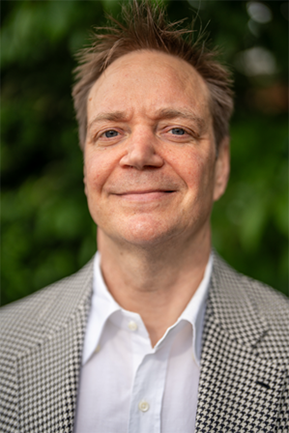
Organiserad brottslighet och droger
Professor Kim Møller guides students in conducting thematic analyses of questions directly connected to his ongoing research.
“In this course, students explore organised crime, drug markets, money laundering, new psychoactive substances, online data, CCTV, crime harm, and cybercrime – areas at the forefront of contemporary criminology,” says Kim.
By working hands‑on with real research questions and current societal challenges, students gain practical analytical experience and develop the skills needed to understand and address some of today’s most pressing crime phenomena.
A scientific conference for students
During the programme introduction students participate in a teaching session we call the criminological conference.
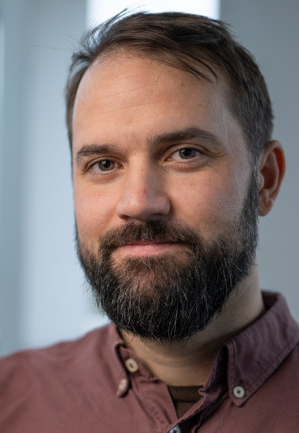
A scientific conference for students
During the programme introduction students participate in a teaching session we call the criminological conference.
The format resembles a scientific conference: researchers present their studies in short talks and then take part in a panel where students can ask questions. The participating researchers vary from term to term and may include everyone from doctoral students to professors.
Alexander Engström is a researcher and programme director for the Criminology Programme.
“The purpose of this session is to ensure that students encounter current research conducted at the department early in their studies and have the opportunity to interact with researchers. Previous research shows that early contact with research strengthens the integration of research throughout the education. Students are typically engaged and curious about the research conducted at the department,” he says.