New 3D human-cell model sheds light on brain injuries in preterm infants
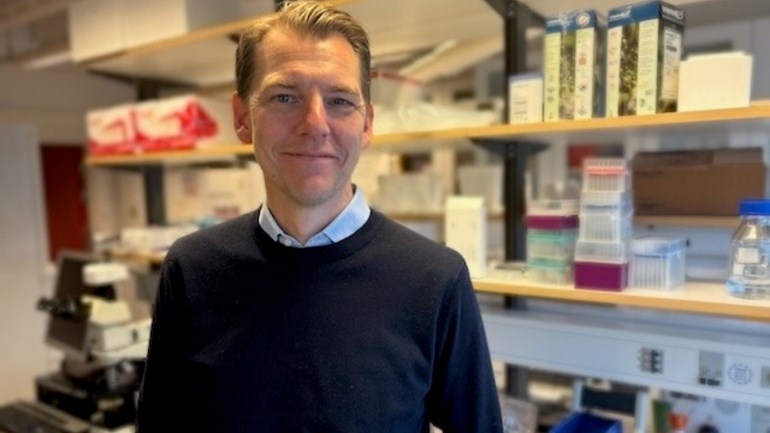
Magnus Gram and his research colleagues have created a model that allows them to see how damage develops in connection with cerebral haemorrhage in preterm babies, thereby mapping the mechanisms and molecules that influence the process.
A research team, made up of academics from Malmö University, Lund University, Karolinska Institutet and KTH Royal Institute of Technology, has developed a 3D model based on human cells that mimics the part of the brain affected by cerebral haemorrhage in preterm infants: this could eventually lead to a treatment.
In an article published in Advanced Science, the researchers identify how neural stem cells in preterm infants are injured following cerebral haemorrhage.
The consequences of haemoglobin ending up in the wrong place in the body are one of the main focuses of my research.
Magnus Gram
“We have managed to create a model where we can look at how these injuries develop in following cerebral haemorrhage and thus map the mechanisms and molecules that influence the process.”
“This is an important step on the way to finding a treatment that can help these children,” says Magnus Gram, associate professor of biomedicine and researcher at Malmö University.
Preterm birth affects approximately 15 million newborns globally each year and is the leading cause of neonatal mortality and morbidity. Cerebral haemorrhage occurs in up to 20 per cent of extremely preterm infants (born before week 28). Severe cerebral haemorrhages in preterm infants increase the risk of cerebral palsy and other neurological impairments. In the most severe cases, the haemorrhage can be life-threatening or lead to extensive brain damage with motor and cognitive difficulties.
Using the 3D model, researchers have succeeded in recreating the vulnerable and important subventricular zone (SVZ).
"The brain's cavities – the ventricles – contain cerebrospinal fluid, which contributes to communication between the brain and the blood. The SVZ contains an area of immature blood vessels that are very fragile. When these vessels rupture, bleeding occurs and blood enters the ventricles, causing intraventricular haemorrhage (IVH)."
The SVZ is also a source of nerve cell formation. The cerebral haemorrhage has a harmful effect on these neural stem cells, primarily because toxic breakdown products in the blood leak out and damage large parts of the child's brain.
"The haemoglobin in the blood is a strong oxidant and acts a bit like a “rusting agent” in the brain. The consequences of haemoglobin ending up in the wrong place in the body are one of the main focuses of my research," says Gram.
Previously, it has only been possible to study these reactions by analysing cerebrospinal fluid or blood from preterm infants or using experimental animal models in which haemorrhaging is induced in the animals. Both methods have clear limitations.
“The advantage of this compared to animal models is that we are looking at human cells, and that the model is reproducible and we can manipulate factors in a completely different way,” adds Gram.
Anna Herland, professor at the AIMES research centre at KTH and Karolinska Institutet, is part of the research team: "The fact that we are also seeing relevant responses in both simulated conditions and patient samples is very important, as there is currently no established treatment for these patients."
Read the article in Advanced Science