Could laundry detergents become obsolete?

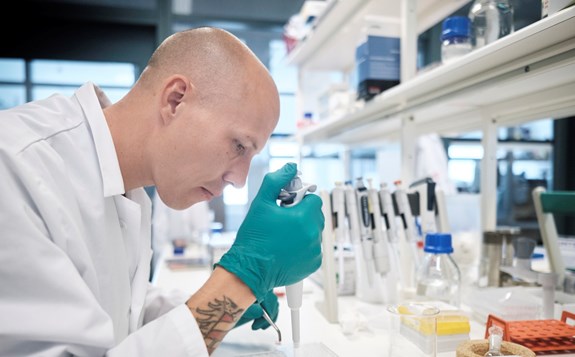
Andriani Tsompou, researcher at the Department of Biomedical Sciences, has studied the removal of olive oil from various materials using purified water.
Could the use of detergents to clean our clothes be a thing of the past? A researcher from Malmö University has investigated how purified water can be used for effective washing with minimal use of surfactants, which are the active ingredient in detergents.
"We have achieved very good results when it comes to washing away olive oil, which is one of the most difficult things to remove. And if we can find a way to remove olive oil, we can probably also wash away other types of dirt," says Andriani Tsompou, who has presented her results in her doctoral thesis: Surface and colloidal mechanisms of surfactant-free cleaning: From oil removal to bacterial viability in purified water.
Now we understand the basic mechanisms and chemical reactions, we can begin to tweak various factors to find optimal washing cycles for purified water.
Andriani Tsompou
Tsompou has studied the removal of olive oil from both hydrophilic (such as glass) and hydrophobic surfaces (such as plastic) and analysed the interactions between olive oil, water, and textiles, especially cotton. To further study the broader impact of purified water, she has also evaluated the viability and survival rate of bacteria after incubation in different degrees of purity.
Due to increased concern about the environmental impact of detergents, research has focused on more environmentally friendly cleaning methods, with the use of purified water being one of the alternatives. Purified water is water that has been filtered or processed to remove contaminants and harmful chemicals, such as chlorine, bacteria, and heavy metals. To meet the definition of purified water, according to EU and international standards, the water must not contain more than 10 parts per million (ppm) of dissolved solids.
The goal is that we will not need to use chemicals to wash different materials.
“Now we understand the basic mechanisms and chemical reactions, we can begin to tweak various factors to find optimal washing cycles for purified water. The washing cycles in our machines today are calibrated based on the addition of chemicals.”
In her analyses of dirt removal on cotton, she has conducted experiments at the MAX IV laboratory in Lund. “We developed a 3D-model of the cotton where you could see how the water and oil reacted with the textile and where the liquids settled in the cotton. For example, we could see exactly where the oil was.”
The researchers discovered that ordinary tap water washed a plastic material quite well on its own – even better than purified water.
“We figured out that this is because tap water has a higher pH value than purified water. By increasing the pH of water, we see that the added ions can form their own types of surface-active substances, such as surfactants, when they interact with the oil. So, the water formed a kind of natural detergent, you could say," explains Tsompou.