Nanotechnology paves the way for new antiviral drugs and simpler virus tests
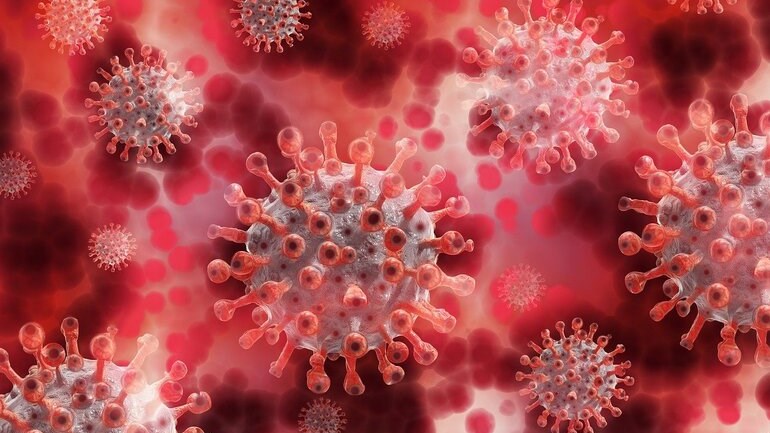
Researchers at Malmö University see the work as a groundbreaking contribution to the rapidly growing field of multivalent nanomedicine.
Researchers at Malmö University have developed a new type of nanomaterial that can block a virus from attaching to cell surfaces and potentially simplify virus detection. This could become a powerful alternative to today's standard virus tests.
The researchers also see their work as an important contribution to the rapidly growing field of multivalent nanomedicine.
“Our results could lead to new sensors that quickly and accurately detect viruses, and are easier to use than current technologies,” says Yulia Sergeeva, who is part of the research team that conducted the study which was recently reported in the leading journal ACS Central Science.
Sergeeva and her colleagues are developing new materials using a platform called rSAM (Reversible Self-Assembled Monolayer). This technology makes it possible to cover a surface with small molecules that can bind proteins, for example, through multivalence. Sergeeva explains:
“Multivalency can be thought of as a kind of biological Velcro: while individual interactions are weak and reversible, together they create much stronger and more resistant bonds.
“They play a crucial role in many biological processes, such as cell communication and the early stages of virus and bacteria binding to the cell surface.”
Reduces the risk for vulnerable groups
In the study, the researchers used the technique to develop a virus-binding nanomaterial. To achieve this, they used nanosized gold particles and applied an rSAM containing a small sugar – sialic acid – which occurs naturally on the cell surface.
“Sialic acid is involved in the first stage of influenza infection by establishing connections with a specific protein. In these studies, we worked with the H5N1 subtype, commonly known as bird flu virus,” says Sergeeva.
The research team also tested whether these nanoparticles could act as inhibitors and prevent viruses from attaching to and penetrating cells. Existing antiviral drugs often only work after the virus has penetrated the cells, which can pose a risk to vulnerable groups such as the elderly, pregnant women and children.
In the experiments, they found that rSAM-coated nanoparticles can prevent the influenza virus from binding to cells even at very low concentrations.
How will you use the results in future research?
"We will investigate how toxic these nanoparticles are to ensure that they can be used clinically. We are also studying how the technology can be used to distinguish between different types of viruses, and exploring its potential for detecting other viruses such as coronaviruses. We plan to look at its ability to stop bacterial growth, which opens even more possibilities for medical applications,” Sergeeva concludes.