We use cookies on this website. Cookies help us deliver the best experience on our website. More about cookies

-
- Education
- Education
- Find programmes and courses
- Applications and admissions
- Tuition fees
- Scholarships
- Exchange studies at Malmö University
- Study Guidance
-
- After admission
- After admission
- Moving to Malmö
- Pre-orientation
- Arrival guide
-
- About studies at Malmö University
- About studies at Malmö University
- Why choose Malmö University
- Understanding university studies
- Connect with our students
On the page -
- Research
- Research
- Find researchers and research
-
- Doctoral studies
- Doctoral studies
- Doctoral courses
-
- Doctoral schools
- Doctoral schools
- Adaptation of urban space through sustainable regeneration
- Culturally Empowering Education through Language and Literature
- Doctoral school: DACHE
- Education, Learning and Globalisation
- Finding ways in a time of great future challenges (FinnFram)
- Swedish National Graduate School in Science and Technology Education Research
- Learning in Multicultural Societal Contexts
- Pedagogy and Vocational Skills
- Relevancing Mathematics and Science Education (RelMaS)
- Sustainable Movement Education
- The National Research School for Professionals in Social Services
- Research subjects
-
- Research centres
- Research centres
- Biofilms Research Centre for Biointerfaces
-
- Citizen Health
- Citizen Health
- Kids in Action
- Imagining and Co-Creating Futures
- Institute for Urban Research
- Malmö Institute for Migration Studies
- Literacy and Inclusive Teaching
- Centre for Work Life Studies
- Sustainable Digitalisation Research Centre
- Centre for Sexology and Sexuality Studies
-
- Research publications
- Research publications
- Search for research publications in Diva
- Malmö University Press
-
- Research in focus
- Research in focus
- Focus: In the classroom
- Focus: The Election 2026
- Focus: A future with AI
- Focus: Climate and society
- Focus: Peace, democracy and human rights
- Focus: The mouth
- Focus: Migration
- Focus: Elite Sport, Football and Supporter Culture
- Focus: Perspectives on Malmö
- Focus: Loneliness
- Research events
- Participate in a research study
On the page -
- Collaboration & Innovation
- Collaboration & Innovation
-
- Levels of collaboration
- Levels of collaboration
-
- Local collaboration
- Local collaboration
- Muvah
- Co-Create Malmö
- Regional collaboration
- National collaboration
-
- International collaboration
- International collaboration
- UNIC
- Innovation
- Collaboration with students
- Collaborate with researchers
- Culture collaboration
- Support Malmö University
- Alumni & Friends
On the page -
- About us
- About us
-
- Meet Malmö University
- Meet Malmö University
- The history of the University
- Malmö University in numbers
- Sustainability
-
- Management and organisation
- Management and organisation
-
- Faculty of Culture and Society
- Faculty of Culture and Society
- Department of Global Political Studies
- School of Arts and Communication
- Department of Urban Studies
-
- Faculty of Education and Society
- Faculty of Education and Society
- Department of Childhood, Education and Society
- Department of Sport Sciences
- Department of Culture, Languages and Media
- Department of Natural Science, Mathematics and Society
- Department of Society, Culture and Identity
- Department of School Development and Leadership
- The Centre for Teaching and Learning (CAKL)
-
- Faculty of Technology and Society
- Faculty of Technology and Society
- Department of Computer Science and Media Technology
- Department of Materials Science and Applied Mathematics
- Faculty of Odontology
- Management and decision-making paths
- Malmö University's strategy 2030
-
- Quality assurance work at the University
- Quality assurance work at the University
- Widened recruitment and participation
- University Dental Clinic
-
- Malmö Academic Choir and Orchestra
- Malmö Academic Choir and Orchestra
- Student work – video pieces
On the page -
On the page
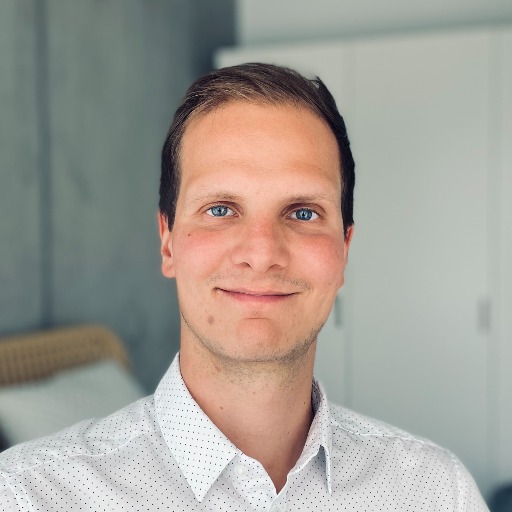
Presentation
My research is situated at the intersection of Human-Computer Interaction (HCI) and health, focusing on scenarios in which self-tracking is, or could soon be, embedded in care processes for chronic conditions.
I aim to explore tracking activities that are meaningful for patients and family caregivers while also supporting healthcare professionals, paying particular attention to tensions across these roles. This work builds on design inquiries and empirical studies, including sensor-based active tests for symptom tracking in Parkinson’s disease and a screening tool that enables family caregivers of colorectal cancer patients to monitor their support needs. The research is conducted in collaboration with clinical partners and contributes to ongoing HCI conversations about patient-centred self-care.
I am especially interested in how patients, family caregivers, and clinicians interpret tracking activities and resulting data representations, and how these:
- (Re)shape perceptions of individual disease trajectories
- Influence existing and emerging coping practices
- Affect bodily awareness
- Influence what is discussed, prioritized, and acted upon in clinical encounters
In parallel, I teach undergraduate and graduate courses at Malmö University, am responsible for the master’s course in Prototyping Technologies, and supervise bachelor’s theses focused on the intersection of HCI and health.
Publications
-
2026 | Conference paper
"It's Like an Oxygen Mask": A Self-Care Tool Addressing Family Caregivers' Unmet Needs in Colorectal Cancer Care
Benjamin Maus, Maria Samuelsson, Jenny Jakobsson, Marie-Louise Möllerberg, Dario Salvi, Carl Magnus Olsson
-
2026 | Article in journal
The validity and reliability of the Swedish CancerSupportSource-Caregiver: a screening tool for psychological distress and support needs in clinical cancer care
Maria Samuelsson, Marie-Louise Möllerberg, Benjamin Maus, Carl Magnus Olsson, Jenny Jakobsson
-
2026 | Conference paper
From Active Tests to Co-Interpretation: Design Considerations for Data Representations in Parkinson's Care
Benjamin Maus, Gent Ymeri, Carl Magnus Olsson, Dario Salvi, Myrthe Wassenburg, Mareike Glöss, Per Svenningsson
-
2026 | Article in journal
Linking everyday physical activity and capacity tests using wearable and mobile technologies in older adults and cardiac cohorts: protocol for a pilot observational study
Sara Caramaschi, Benjamin Maus, Carl Magnus Olsson, Daniel Smedberg, Helmuth Kristen, Millie Whitehead, Elizabeth Orchard, Dario Salvi
-
2025 | Article in journal
The lived experiences and data speculations of people with Parkinson's disease using active tests for symptom-tracking
Benjamin Maus, Gent Ymeri, Myrthe Wassenburg, Mareike Glöss, Carl Magnus Olsson, Dario Salvi, Per Svenningsson