
FACULTY OF CULTURE AND SOCIETY | Seminar
Alexandra Brankova: "Russian Digital Nationalism"
Tuesday 21 April, 15:15 - 17:00
Zoom
Niagara, NI:C1029, Nordenskiöldsgatan 1
Welcome to RUCARR seminar!
Alexandra Brankova: "Russian Digital Nationalism: Digital Practices and Discursive Constructions of the Russian Nation in a Nationalist Media Ecology"
Speaker
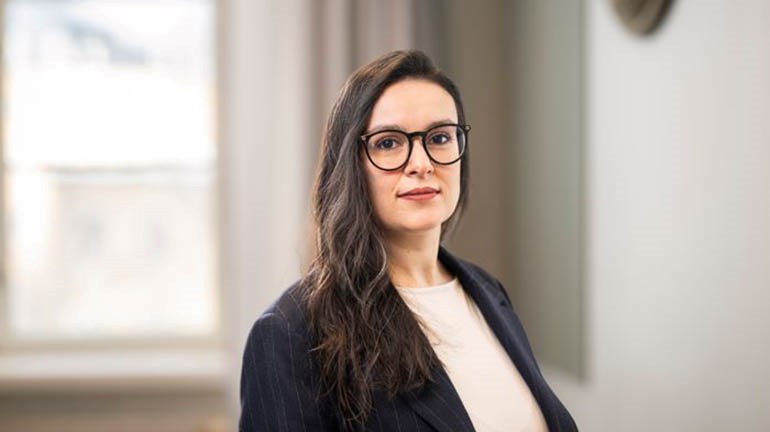
Alexandra Brankova is a postdoctoral fellow at the Department of Political Science at the Swedish Defence University working on a project about Geopolitical Narratives and mediatisation of emotions in international relations. Alexandra is also an affiliated researcher at the Institute for Russian and Eurasian studies, Uppsala University. She holds a PhD degree in Media and Communications from
Uppsala University. Her research interests include geopolitical narratives, identity construction, international relations, digital media, & nationalism studies.
Abstract
The seminar explores the discursive construction and digital enactment of Russian nationalism in a hybrid media system, before and after Russia’s full-scale invasion of Ukraine. The discourses and practices are situated through a close mapping of the Russian nationalist media ecology, and intertextuality with other actors is examined (such as state institutions, state-aligned media groups, the Russian Orthodox Church portals, military bloggers, and influencers). Theoretically, the study is grounded in the discursive turn of nationalism theories, critical discourse studies, digital practices, and media ecology. Media outlets owned by entrepreneurs of influence (such as Konstantin Malofeev or Yevgeny Prigozhin) or the state act as intermediaries between the regime and audiences. A mixed-methods and longitudinal approach (June 2018–June 2023) was adopted, combining digital methods (such as data scraping and netnography) with discourse-historical analysis, incorporated into the
framework of a digital discourse-ethnographic approach. The primary data for this study consists of websites and media publications (news, opinion pieces, manifestos, videos), social media posts (from VKontakte and Telegram), and other audio-visual formats.
The findings reveal that the Russian nationalist media ecology penetrates mainstream media spaces, youth initiatives, and memory politics. Discourses about the nation are not only found in texts of various formats and genres. They are also enacted through digital practices of representation and aesthetics, gamified through virtual or augmented reality applications, and manifested in social media engagement campaigns, reels, or participatory denunciation. The discourses about the Russian nation and its enemies construct a supranational identity and narratives about Russia’s return to great power
politics, striving towards the establishment of multipolarity. Russian digital media and technological infrastructures are subjects of securitisation and ongoing enclosure framed as a push for Internet sovereignty from Western platforms. Neo-authoritarian hybrid media systems involve media intermediaries in nation-building, political influencing, discourse dissemination, and user engagement in times of war, going beyond standard mechanisms of restrictions and surveillance.
Welcome!