Ten years of research into a new geopolitical reality
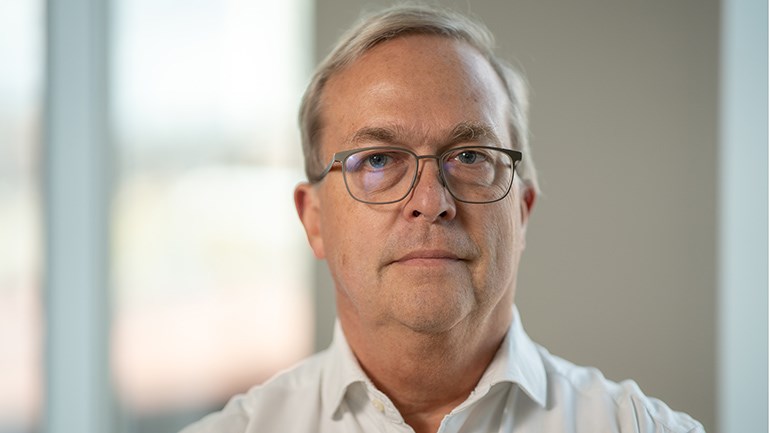
Bo Petersson, professor of political science and head of RUCARR - Russia, Ukraine and the Caucasus Regional Research.
For ten years, a small but dynamic research group at Malmö University has been studying nationalism, politics, and security in Russia, Ukraine, and the Caucasus region. This is a field of research that has become increasingly relevant as the war in Ukraine continues.
RUCARR – Russia, Ukraine and the Caucasus Regional Research, made up of around ten academics, has become a strong hub both nationally and internationally: a large network has been created, not least within the Nordic region. This year, a series of lectures will be held in a Distinguished Speaker Series to mark the 10th anniversary of the research group’s formation.
“The region has, of course, become more prominent due to the war. We are now focusing more on issues relating to the general contestation between democracy and autocracy, and in this regard, the war against Ukraine has become perhaps the most significant factor,” says Bo Petersson, professor of political science and head of RUCARR.
A more global perspective
This also means that research has expanded to encompass not only the geographical area in question but has also taken on a more global perspective. Over the past year, RUCARR has been coordinating a major research application involving 12 universities in 10 countries on early warning signs of democratic erosion and decline.
“This could be, for example, that certain subjects within academia are considered taboo, that media are suppressed, or it could be about increased populism in politics, illiberal legislative changes or various austerity measures,” says Petersson.
From February to December, RUCARR is organising, generally once a month, anniversary lectures in its Distinguished Speaker Series. Speakers include Jade McGlynn, a researcher at King's College London, who in her book Memory Makers describes how the Kremlin recreated a mythical past to justify today's militant politics, and Gudrun Persson, a well-known Russia expert at Stockholm University.
- 24 February
Andrea Petö, professor of gender studies, CEU, Vienna/CEU Democracy Institute, Budapest: “Illiberal Turns and Gender Backlash: Rethinking Democratic Erosion” - 17 March
Jade McGlynn, post-doctoral fellow and head of the Ukraine and Russia Programme, King’s College London: “Sovereignty without Territory: The Puzzle of Resistance in Occupied Ukraine” - 14 April
Henry Hale, professor of political science and international affairs, George Washington University, Washington DC: "The Role of Traditional Moral Appeals in Putinite Autocracy" - 5 May
Madina Tlostanova, professor of postcolonial feminism, Linköping University: “Caucasian deep coalitions? A case for the future relational critical political imaginary” - 9 June
Gudrun Persson, associate professor, Stockholm University:” The Evolution of Russian Strategy since the Crimean War” - 22 September (TBC)
Marlene Laruelle, professor, director, Institute for European, Russian, and Eurasian Studies, George Washington University, Washington DC: “Russia's (post)war culture and the role of veterans” - 20 October
Staffan I. Lindberg, professor of political science, University of Gothenburg, Founding Director of V-Dem: “Global Trends According to Democracy Report 2026: Going from Bad to Worse?” - 27 October
Marianne Kneuer, professor of comparative politics, Technical University of Dresden: “ What makes democratic reconstruction after democratic erosion fail or succeed? Comparing Georgia and Moldova“ - 17 November
Sergei Medvedev, professor, Charles University, Prague: “War in Ukraine as a Focal Point of Russian History" - 8 December
Volodymyr Kulyk, professor, Kyiv School of Economics: “Language, Identity and Power: A New Perspective on Language Policy in Ukraine”
Russia, Ukraine and the Caucasus Regional Research (RUCARR)
Research within Russia, Ukraine and the Caucasus Regional Research (RUCARR) concerns political, social, cultural, economic and other significant relationships within and between Russia, Ukraine and the Caucasus, as well as between neighbouring states.
More about Rucarr