
We use cookies on this website. Cookies help us deliver the best experience on our website. Read about cookies.
-
- Education
- Education
- Find programmes and courses
- Applications and admissions
- Tuition fees
- Scholarships
- Exchange studies at Malmö University
- Study Guidance
-
- After admission
- After admission
- Moving to Malmö
- Pre-orientation
- Arrival guide
-
- About studies at Malmö University
- Why choose Malmö University
- Understanding university studies
- Connect with our students
On the page -
- Research
- Research
- Find researchers and research
-
- Doctoral studies
- Doctoral studies
- Doctoral courses
-
- Doctoral schools
- Doctoral schools
- Adaptation of urban space through sustainable regeneration
- Culturally Empowering Education through Language and Literature
- Doctoral school: DACHE
- Education, Learning and Globalisation
- Finding ways in a time of great future challenges (FinnFram)
- Swedish National Graduate School in Science and Technology Education Research
- Learning in Multicultural Societal Contexts
- Pedagogy and Vocational Skills
- Relevancing Mathematics and Science Education (RelMaS)
- Sustainable Movement Education
- The National Research School for Professionals in Social Services
- Research subjects
-
- Research centres
- Research centres
- Biofilms Research Centre for Biointerfaces
-
- Citizen Health
- Citizen Health
- Kids in Action
- Imagining and Co-Creating Futures
- Institute for Urban Research
- Malmö Institute for Migration Studies
- Literacy and Inclusive Teaching
- Centre for Work Life Studies
- Sustainable Digitalisation Research Centre
- Centre for Sexology and Sexuality Studies
-
- Research publications
- Search for research publications in Diva
- Malmö University Press
- Research events
- Participate in a research study
On the page -
- Collaboration and Innovation
-
- Levels of collaboration
-
- Local collaboration
- Muvah
- Co-Create Malmö
- Regional collaboration
- National collaboration
-
- International collaboration
- UNIC
- Innovation
- Collaboration with students
-
- Collaborate with researchers
- Labs and facilities
- Culture collaboration
- Support Malmö University
- Alumni & Friends
- Malmö möts
On the page -
- About us
- About us
-
- Faculties and departments
-
- Faculty of Culture and Society
- Department of Global Political Studies
- School of Arts and Communication
- Department of Urban Studies
-
- Faculty of Education and Society
- Department of Childhood, Education and Society
- Department of Sport Sciences
- Department of Culture, Languages and Media
- Department of Natural Science, Mathematics and Society
- Department of Society, Culture and Identity
- Department of School Development and Leadership
- The Centre for Teaching and Learning (CAKL)
-
- Faculty of Technology and Society
- Department of Computer Science and Media Technology
- Department of Materials Science and Applied Mathematics
- Faculty of Odontology
- University Dental Clinic
- Management and decision-making paths
-
- Malmö University's strategy 2030
- Sustainability
- Widened recruitment and participation
- Quality assurance work at the University
-
- Malmö Academic Choir and Orchestra
- Student work – video pieces
-
- The University in a troubled world
- Campus total defence
On the page -
- Contact
- Contact
- We'll help with your questions
-
- News and press
- News and press
-
- Graphic manual
- Graphic manual
- Logo
- Colours
- Typography
- Visual language
- Film and live broadcasts
- Visit Malmö University
- Map of the buildings (Google Maps)
- Merchandise
- Supplier information and invoice management
- Whistleblowing
On the page
FACULTY OF CULTURE AND SOCIETY | Lecture
Gudrun Persson: Evolution of Russian Strategy since the Crimean War
Tuesday 9 June, 17:30 - 19:00
Malmö City Library, Kung Oscars väg 11
Welcome to the RUCARR Distinguished Speaker Series June 9!
Gudrun Persson: ”The Evolution of Russian Strategy since the Crimean War”
Speaker
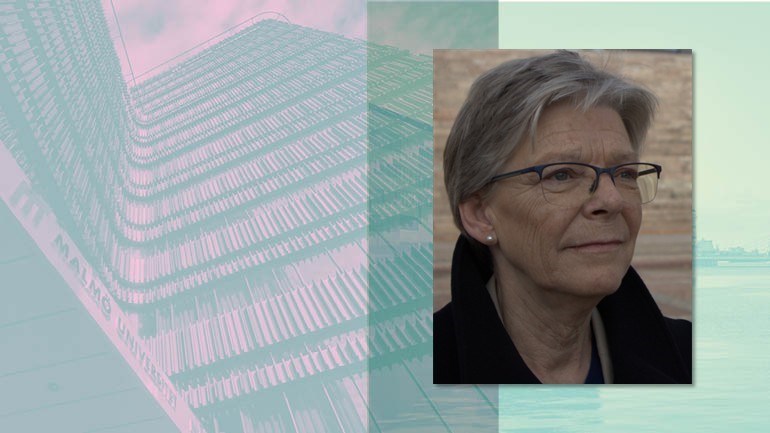
Dr. Gudrun Persson, Associate Professor at the Slavic Department, Stockholm University. She has published widely on Russian affairs, including five monographs. She is a member of The Royal Swedish Academy of War Sciences, and The Royal Society of Naval Sciences. Her latest book is "Russian Military Thought: The Evolution of Strategy since the Crimean War" (Georgetown University Press, 2025).
Please note that this lecture will not be streamed.
Abstract
Novel insights into Russian military thought—from the Crimean War to the war in Ukraine
The development of the Russian military's strategic thought is an understudied and thus misunderstood subject in the West. Strategy in Russia encompasses the broader context of foreign and domestic policy as well as the military's ties to the country's leadership. The military's strategic thought is closely linked to Russia's existence as a state and explains patterns of Russian confrontation.
In Russian Military Thought, the renowned scholar Gudrun Persson offers novel insights into Russian military thought on doctrine and strategy, from the Crimean War to Russia's full-scale invasion of Ukraine. Persson dismantles the simplistic notion that Russian military thought is "backward," instead presenting a deeper analysis of the drivers that influence the changes in Russian military strategy. Through archival research based on Russian language sources, Persson offers a multidisciplinary perspective, drawing on theoretical insights from history and political science that enable her to make a nuanced, qualitative analysis.
This book will be essential reading for practitioners, scholars, and students who seek to understand the mind-set of the current Russian leadership and the constraints that shape Russia's future possibilities.
Moderator
Prof. Bo Petersson, Malmö University

Share Event