AI can hear how ill you are
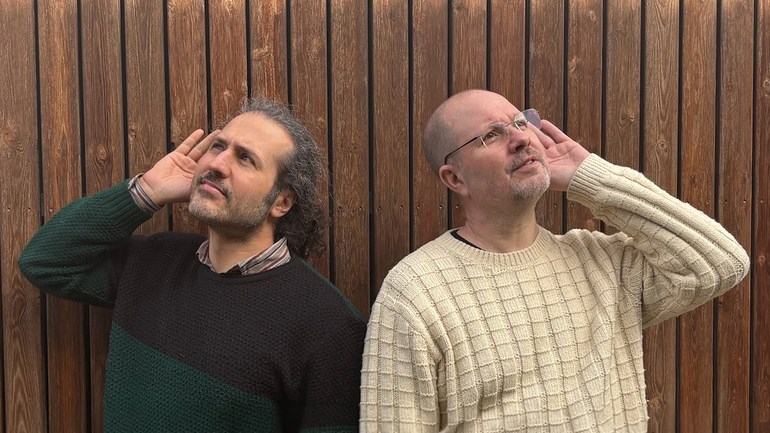
Researchers Dario Salvi and Carl Magnus Olsson are investigating how voice data collected via mobile phones and machine learning can be used to detect signs of Parkinson’s disease.
Can artificial intelligence detect illnesses from the sound of our voices? It is a question that an increasing number of researchers are asking. Carl Magnus Olsson and Dario Salvi at Malmö University are taking part in a European collaboration that is studying how the voice can be used as a form of health indicator.
Olsson and Salvi, both based at the Faculty of Technology and Society, are investigating how voice data collected via mobile phones and machine learning can be used to detect signs of Parkinson’s disease. Studies show that the disease often affects the voice, and their analyses suggest that certain voice characteristics may be linked to the severity of the disease.
“In the long term, voice analysis could become a simple way of monitoring health remotely, for example via mobile phones. Then AI could literally ‘listen’ for early signs of the disease,” says Salvi.
The project is part of the eVoiceNet research network, which brings together researchers from across Europe to develop methods for vocal biomarkers: measurable changes in the voice that can be linked to various diseases. The network is funded by the EU’s COST programme (European Cooperation in Science and Technology) which primarily supports collaboration, workshops, and the exchange of knowledge between researchers.
“One of the reasons for participating in a COST Action is the high success rate of this form of collaboration in securing funding for larger joint EU applications. The funding received in COST Action is primarily for networking and collaboration, whilst research funding must secured through other grants,” says Olsson.
An important part of the collaboration also involves creating common standards for how voice data is collected and analysed. The aim is to make the research more comparable and reproducible, something that is needed if the technology is to be used in healthcare in the future.
“Through the network, we will be able to share our data and gain access to other data sources. Our dataset isn’t particularly large, but if it is combined with other datasets, we can use techniques such as deep learning more effectively,” adds Salvi.