Extreme comments are now just a daily norm on social media
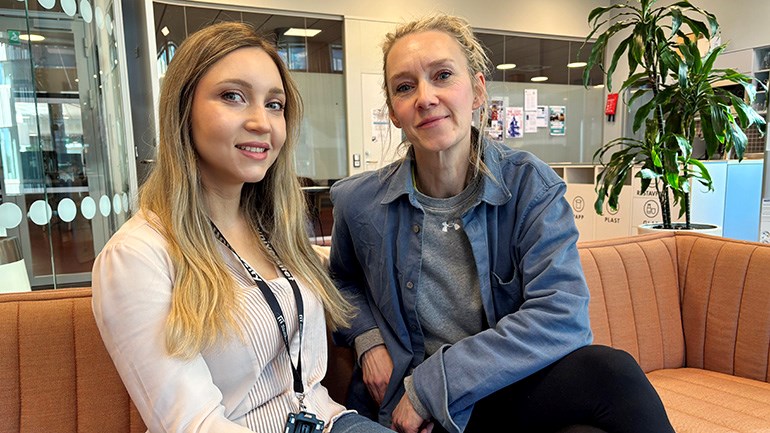
Everyday extremism is in the process of becoming normalised, according to Jullietta Stoencheva and Tina Askanius.
Hate, threats and messages glorifying violence are now openly disseminated in social media comment sections – often without being challenged. A new research study shows how extremist expressions have become part of everyday political discourse online.
The study is part of a three-year EU project on everyday extremism. The researchers have investigated how the normalisation of extreme ideas is reflected in the conversational climate on platforms such as X, Facebook, Instagram, and TikTok.
“These are quite violent ideas that have become so commonplace that we no longer notice them. They pass by without being flagged by any moderation system, but also without being challenged or questioned,” says Tina Askanius, a professor of media and communication studies at Malmö University.
One of the sub-studies in the project focused on a political event that took place simultaneously across Europe: the 2024 European Parliament elections. The researchers tracked how extremist messages spread on social media in Sweden, Austria, and Bulgaria.
Instead of overtly extremist symbols, such as swastikas, so-called ‘dog whistles’ are often used – subtle or coded expressions that may seem harmless to outsiders, but which carry a specific and often violence-glorifying meaning.
Jullietta Stoencheva
“We created new profiles on the platforms and acted as ordinary users,” says Jullietta Stoencheva, a PhD student at Malmö University.
They monitored all established political parties, the ten largest media outlets in each country, as well as political commentators and others involved in the election. In this way, they sought to recreate the kind of information flow that a user interested in politics would encounter. Systematic data collection took place in the weeks leading up to the election. The focus was on the comments, not the posts themselves, particularly those in the form of memes.
Rather than studying extreme actors and environments, the researchers wanted to see how these ideas fit into the broader democratic discourse taking place in the digital sphere.
“We wanted to see whether these ideas had found their way into some form of everyday political conversation among ordinary people,” says Askanius.
The comments sections contain everything from hints of violence to direct threats, and violent images that dehumanise entire population groups. This is often directed at groups such as women, LGBTQ+ people, and migrants. And this happens almost regardless of what the post itself was actually about.
The messages are often encoded in language and symbols that are not always clear to everyone.
“Instead of overtly extremist symbols, such as swastikas, so-called ‘dog whistles’ are often used – subtle or coded expressions that may seem harmless to outsiders, but which carry a specific and often violence-glorifying meaning. For example, if you post an emoji of an aeroplane, it can be interpretated as ‘deport them’, and a water pistol emoji can mean ‘execute them’,” says Stoencheva.